


«Ukraine» was not only south of Belarus, but also in the east and north
In the 16th century, the term «Ukraine» had a completely different meaning than it does today. It was not just a geographical designation of the «edge» of a state, but a concept closely associated with war and defense. Historian Mikoła Vołkaŭ analyzed documents of the Grand Duchy of Lithuania from that time and concluded that «Ukrainian castles» existed not only on the border with the Wild Fields, but also directly in Belarus — where there was confrontation with Moscow.
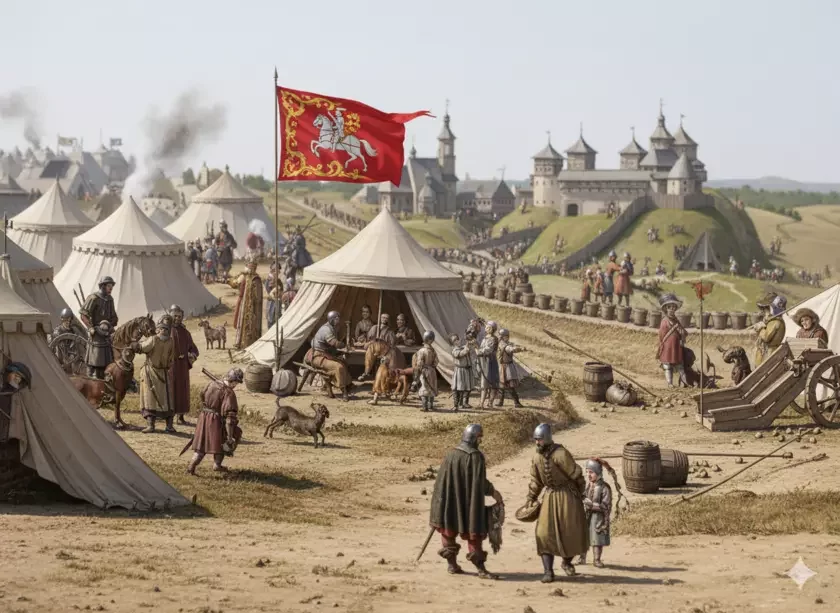
For many researchers of the Grand Duchy of Lithuania, the concepts of «Ukraine» and «Ukrainian castles» were always known and, it seemed, completely understandable — referring to the borderlands of the state. However, as Mikoła Vołkaŭ notes, after a detailed study of the sources, it became clear: this concept is quite specific and clearly indicates a region of military confrontation.
«Ukraine» as a zone of permanent war
The historian emphasizes that the military aspect of the concept is evidenced by the context of its use itself. In documents of that time, the word «Ukraine» is almost impossible to find without mentions of military danger, threat, or defensive structures.
In fact, it refers to a peculiar «frontier» — a zone of permanent war with Moscow and Crimea.
Where was «Ukraine» located?
Based on the materials of the GDL Metrica for 1500—1581, the researcher made a selection of castles that were directly referred to as «Ukrainian» in documents.
The resulting map shows a powerful defensive belt along the most important Belarusian rivers. In the Poŭzvie region, these are Drysa, Dzisna, Polatsk, Varonieč, Ula, Viečallie, Liepiel, Azaryšča, Uśviat, Suraž, and Viciebsk. Further, the line follows the Dnieper — Dubroŭna, Orša, Kopyś, Mahilioŭ, Bychaŭ, Rahačoŭ, Strešyn, Horval, Rečyca, Liubieč, Kyiv. The eastern flank was held by castles along the Sož: Mścislaŭ, Kryčaŭ, Prapojsk, Čačersk, and Homieĺ. Also belonging to «Ukraine» were Mazyr, Brahin, and a number of other castles, a smaller part of which are in the territory of modern Ukraine.
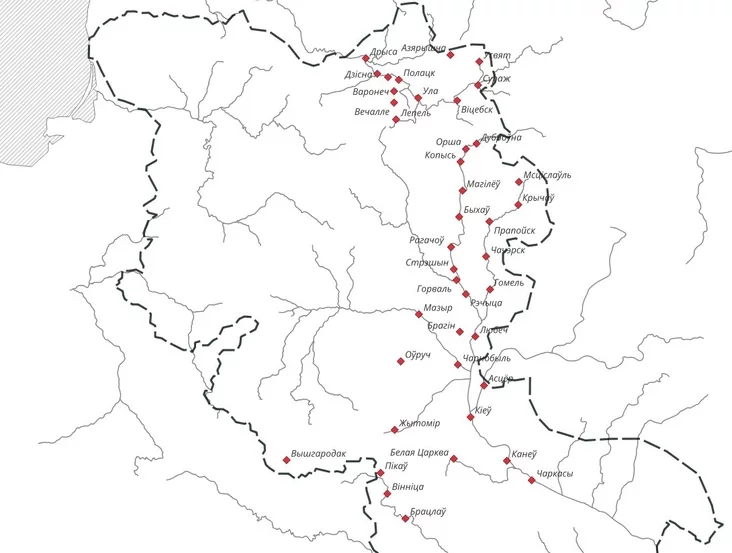
The geography of this phenomenon had its own dynamics and directly depended on the front line. Thus, by the beginning of the 16th century, Vyazma, Smolensk, and Roslavl were considered «Ukrainian.» And during the Livonian War, after the loss of Polatsk in 1563, a whole network of new «Ukrainian» castles was built around it to block the Moscow garrison in the captured city.
Interestingly, some expected cities did not make it into the list of «Ukrainian» ones. For example, Volynian Lutsk and Kremenets, as well as Braslav. The question remains regarding the status of Svislach, Babruysk, and Barysaw. Another peculiarity: Inflanty (Livonia), despite a difficult war ongoing there since 1558 and many castles being supplied from Vilnia, were not referred to as «Ukraine» in documents.
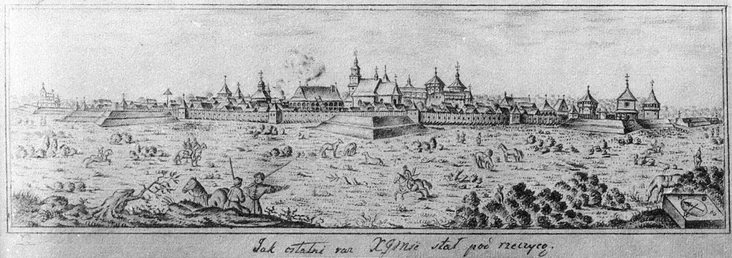
It is worth noting that documents primarily described state castles in this way. There are few private ones in these lists, as magnates were reluctant to put themselves on the front line of defense due to the high cost of maintaining fortifications.
«Ruthenian Ukraine» near Polatsk and Viciebsk
One of the most interesting observations was the use of the term «Ruthenian Ukraine» in relation to the northeast of modern Belarus.
«In the second half of the 16th century, the concept of «Ruthenian Ukraine» is mentioned in GDL sources. And it refers to Polatsk and Viciebsk, which were called Rus' as a region in the GDL, and in the context of the borderlands — «Ruthenian Ukraine»,» explains Vołkaŭ.
This idea is also confirmed by historian Viačaslaŭ Nasevič, who cited a private letter from Prince Roman Sanguszko dated 1567. The prince writes that he is to travel from his Volynian patrimony «to Rus', His Grace the Lord's Ukrainian estate.» From the context, it is clear that this refers to the front-line territory of the Polatsk Voivodeship during the Livonian War.
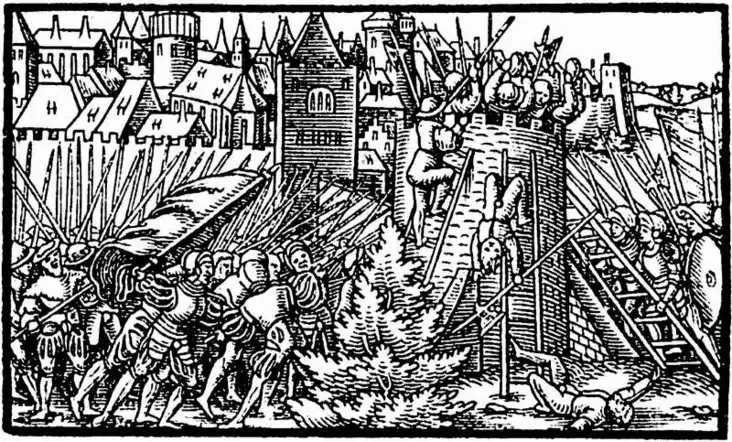
Mikoła Vołkaŭ adds that Sanguszko himself, being of «Ruthenian faith» and hailing from Volyn, which is now part of Ukraine and was then also considered Rus' in a broad sense, perceived Polatsk region as «a luxurious homeland, truly a holy land, Ruthenian land.»
The expression «in that Ukraine» is also found in sources, indicating that the border zone was large and sometimes clarification was required as to which specific section of the border was being referred to.
«Clerk of the castles of the regions of Ukraine»
Another interesting documentary proof was provided by historian-archivist Dzyanis Liseychykaŭ. On a tombstone from 1598 in Dzikushki Church in Lida County, erected for Maryna Skumin-Tyshkevich by her sons Dzmitry and Fiodar, her eldest son, the Minsk starost, is titled as «Clerk of the castles of the regions of Ukraine in the Grand Duchy of Lithuania.»
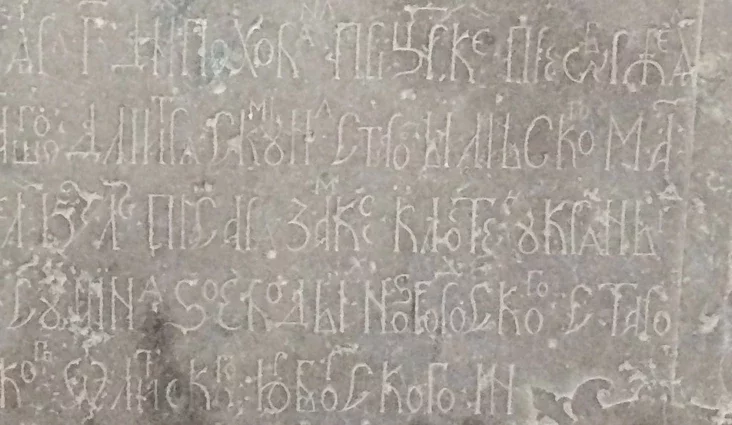
Thus, in the 16th century, the word «Ukraine» for the inhabitants of the GDL meant not so much ethnic or national belonging, but rather a geographical and military-strategic function of the region — to be a shield of the state on the border with a hostile neighbor.
Symbolically, five centuries later, the meaning of this concept has returned to its original significance. The country that is called Ukraine today serves as an outpost for all of Europe, resisting Russian aggression.
«Nasha Niva» — the bastion of Belarus
SUPPORT US


In Russia's Yekaterinburg, a scientist from the Academy of Sciences was beaten to death after preventing children from riding quad bikes on experimental fields


Comments
Тая гетманшчына разам з крымчакамі мянялі палітычны вектар па тры разы на тыдзень. Тое, што яны там некаму нешта абяцалі мінулым летам - нічога не каштавала наступным летам.
А патоп шведы зладзілі.