


"Stand your ground, each as much as they can!" A big interview with Natallia Dulina about GUBazik thugs, Kaliadnikova, and what's happening to whom in the penal colony
The country's best Italianist, former associate professor of the Italian language department at MSLU, Natallia Dulina, was repeatedly sent to Akrestsin after 2020, fired from the university, and later sentenced to 3.5 years in prison. On June 21, she was among 14 political prisoners released from Belarusian prisons after the visit of US President's special envoy Keith Kellogg to Minsk.
Why she finds more sorrow than joy in freedom, about a portrait of Stalin in GUBazik, torture in the punitive isolation cell (SHIZO), Maria Kaliadnikova, her mother, cats, and plans that are not yet being built — in a big interview with Nasha Niva, which Natallia gave the day after her sudden release.
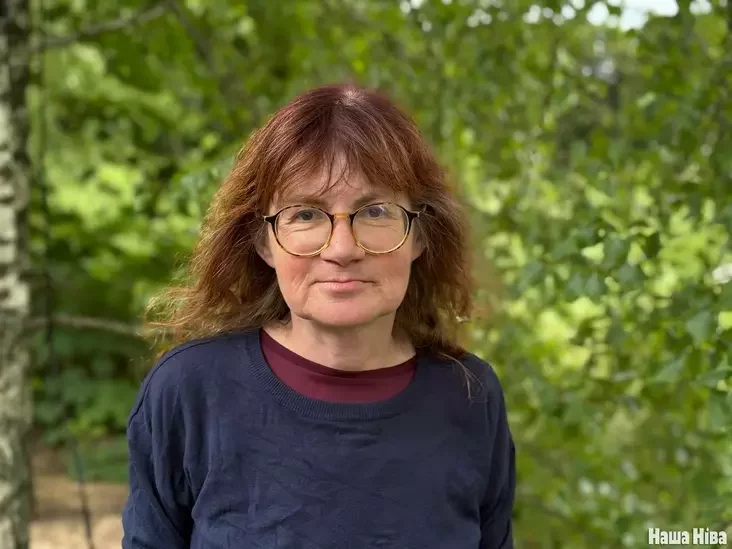
"GUBazik for me means thugs"
"Nasha Niva": Tell us, how were you detained?
Natallia Dulina: Previously, my detention was number one on my list of most spectacular events. But now, of course, I realized that my release was even more spectacular — with that bag over my head…
A classic thing happened to me, which I had already heard from others. I am a night owl by my biological habits: I like to work at night and sleep longer if there are no errands. That day it was somewhere closer to 11 in the morning, and then a call — first to my push-button phone, which I didn't even react to. But another phone was lying by the bed, and they called it — for some reason they said they were from the Kastrychnitski District Department of Internal Affairs regarding the events of 2020 and asked if I could come to them. I said: "Oh, I don't know when..." And then they suggested: "Well, we can come to you. We'll call you back."
I thought then: something's not right. And no, I didn't immediately jump up to clean up the cat litter - I have cats, after all. No, I was still lying there, and then a knock on the door — "Open up!" I jumped up, I needed to get dressed somehow. And they continued: "Open up! We'll break down the door now." And I shouted: "Yes, yes, just let me put something on."
So, I pulled on a tunic, opened the door, saw "cosmonauts" there, and lay down on the floor. I have such a small hallway, and they moved there in tiny steps, one after another, in formation. They even stepped on me a little, not on purpose, they just had no space. They checked if anyone else was home, made sure I was alone.
Then they lifted me, some left, and GUBazik remained. For me, among all the security forces, to describe them, they are like thugs. They have such a twisted idea of how to provoke a person — as if it's a joke, but at the same time, you're not supposed to feel very pleasant. And they behaved in much the same way — they didn't destroy anything, but they started to humiliate me by saying: "Oh, there hasn't been a renovation here since the collapse of the Soviet Union, you live in some kind of hovel and you generally smell of something..." To which I didn't react, because what, did they come here to check how I live?
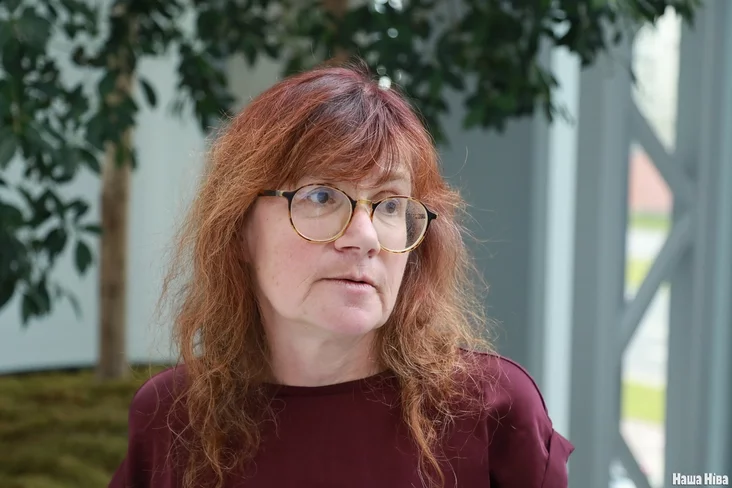
They also asked me questions about symbols. What else do I have? They were supposed to conduct a search, but they didn't, thank God. They just filmed how bad everything was for me while I was changing in the bathroom.
And as it turned out, they later posted a photo of my hallway from the outside, where this whole team was preparing to arrest me. My mother told me about it during one of our first visits. She shared then that when she saw how I was being detained, she felt sick - because of the horror I must have endured. But I felt absolutely no fear, because I already knew perfectly well how this happens. It was my cats that were in shock - they are generally afraid of loud noises and strangers.
"An operative sits, and above his head hangs a photocopy of Stalin's portrait"
Then they led me out in handcuffs into the yard, half-bent. We drove up to GUBazik, I was warned that they would put a hood on me, and told not to lift my head. They led me into a room, where they processed the necessary documents. And there I see, an operative is sitting, and above his head hangs a photocopy of a portrait of Stalin and a quote approximately like this: "I thought that democracy is the power of the people, but Mr. Roosevelt explained to me that democracy is the power of the American people." This made a great impression on me. And later, at the central Investigative Committee, when I tried to tell the investigator about it, saying that Stalin was a murderer, his hands up to his elbows in blood, he replied that there were good things back then too, the economy was good. For me, all this was a very telling episode, after which many questions disappeared by themselves.
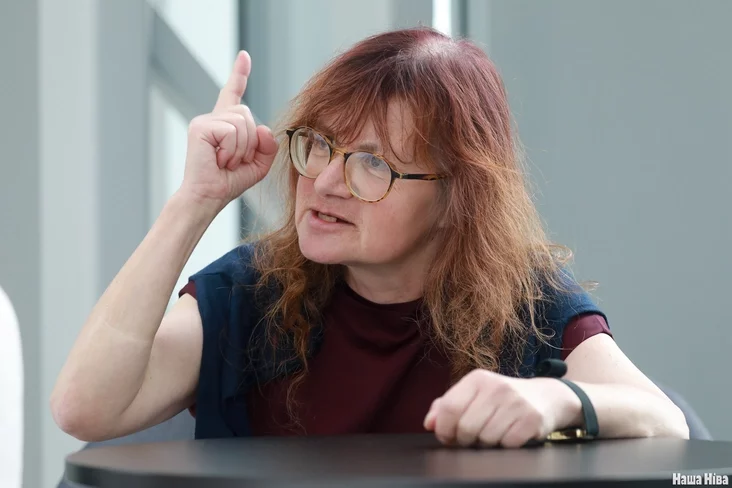
"NN": Who ultimately took care of your cats? Many people worried about their fate.
ND: My mother, she is very cheerful and active. She doesn't just have parental love, but, you know, one based on the feeling that you cannot abandon your child, it is precisely your responsibility.
I knew that the animals would be fine, and indeed - all this time my mother (she has a general power of attorney) took care of everything, doing an inhuman, enormous job. And she needs to continue, because I am now abroad.
"NN": In the penal colony itself, you no longer worked due to your retirement age?
ND: Not a single day. I reached retirement age while still in the pre-trial detention center (SIZO). And when I arrived at the colony, I was classified as a pensioner. They don't work there, they stay in the squad - in the dormitory where the squad is located. When other girls go to work, we follow the daily routine. But, naturally, we had more free time, during which we could drink tea, eat our own food. We could read, walk around the local area - a small yard with fences and wire everywhere. We could only move around the colony accompanied by girls from our squad, whom the administration assigned for this purpose.
"The investigator himself somehow let slip that 'your category cannot receive letters from non-relatives'"
"NN": Did letters reach you?
ND: Everything arrived from my mother, from my husband — with difficulty. In general — letters were only from close relatives. The investigator himself somehow let slip that "your category (political. — NN) cannot receive letters from others."
There was another moment of failure when nothing got through. I think the human factor played a role here. I, let's say, had complaints about an operative. Each squad has a squad leader, an officer, and a curator from the operational department (operative), and a curator from the regime department. The regime officer is responsible for the things we have with us, our appearance, and whether all the rules of the daily routine are followed. Operatives are more concerned with behavior, with some non-material violations. For example, if we are sitting in the kitchen and I offer my friend a candy — I will get a report for that, for which I could be deprived of a visit or a parcel. In rare cases, you can get SHIZO for it.
I once received SHIZO for something for which people are not usually sent there — and it was done deliberately, as experience, mine and others', shows. When an officer calls you by your surname, you must approach him and identify yourself. And so, I didn't report to the operative who I was and what. And he didn't like how my hat was worn (although it was just a little too big, it was absolutely not critical). And he filed a report against me, additionally lying in it.
At the disciplinary commission, headed by the colony chief, you are offered to explain what happened. And then they might talk and say: "So many days in SHIZO for you. Or deprivation of this." I only had one SHIZO as a result, for five days. And even that, I think, was because I didn't admit guilt for my "crime." It was a kind of revenge. I honestly told everyone that I did not consider myself guilty, so why should I lie.
At the commission, they told me I was swimming against the current, to which I replied that live fish always swim that way. And the colony chief noted in the dialogue: "You know, Dulina, you are swimming towards Zarechcha." That's the colony for repeat offenders, those who get a second article or Article 411, for recidivists, in a word.
By the way, I didn't just let the operative's lies about me go; I wrote a complaint against him addressed to the colony chief and the curator of our squad. I sent it through the censors on Monday, on Tuesday I was transferred to another squad, and on Wednesday there was a disciplinary commission. There, I reiterated: I wrote a complaint to you. What did I get? After all that, in addition to SHIZO, I also stopped receiving letters.

"NN": Which moment in your imprisonment turned out to be the most disgusting, terrifying for you?
ND: Physical discomfort, of course, in SHIZO. And I want to tell you, if at least they hadn't taken my glasses, it might have been easier for me, because then I felt excessively defenseless with my myopia. And it was very cold there, my immune system was slowly getting worn down.
In general, all the bad things I could experience, I already experienced at Akrestsin. The conditions there were unbearable, as we all know.
"NN": During your short detentions, you managed to teach others Italian. What about in the colony?
ND: By no means. There, you can't even treat others — with cigarettes, with candy. A report was filed against someone there for lending a pen, and the camera recorded it.
Or, for instance, girls are sent to peel potatoes according to the schedule, and you gave someone rubber gloves — that's it, that's already alienation of property, which is punishable. And if I taught someone, it would be called "coercion to work for useful purposes." It's like in Orwell: freedom is slavery, peace is war, love is hate. It's the Looking Glass world.
"NN": Did you find reasons for joy in imprisonment? What sustained you?
ND: There were joyful days when girls were released. These news of releases — they flew from squad to squad, such a flight from them! But I understood that these were trifles, dust in the eyes from the authorities, that everything was still very bad. That is, they released people, but it's all a deception, because he releases one, but sends in ten.
What also helped was the inner realization that I had done everything correctly, that I was right. Your conscience tells you: well done, little one, you're doing everything right! You know, it's like you've been given a candy: yes, you're a good girl! You didn't betray yourself, you didn't deceive yourself.
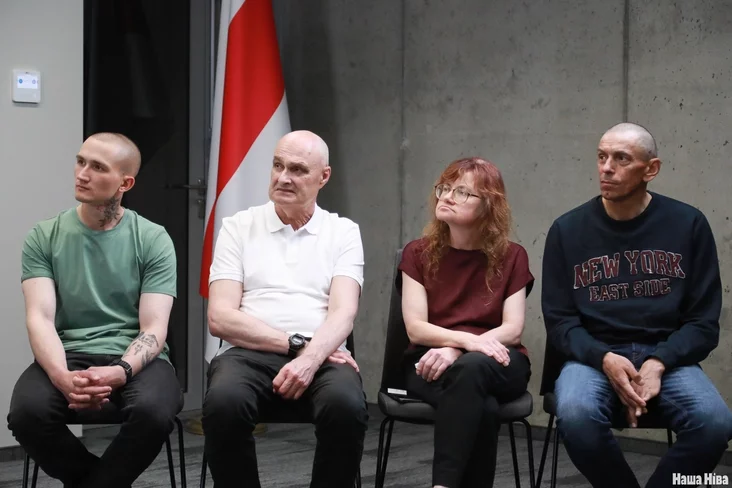
"I never saw Masha Kaliadnikova without a smile"
"NN": Can you tell us about other female political prisoners you encountered? Who, in your observations, has the worst health, and who should be considered for release lists?
ND: I know that Iryna Merhel, who was involved in the Autukhovich case, has very poor health. Liubou Rezanovich is also very ill, and her husband, Siarhei, an Orthodox priest, is diabetic. Of course, Masha [Kaliadnikova] needs to be saved. She is very resilient, I never saw her without a smile. And she treats everyone there with kindness, conducts herself very worthily. She is back in the squad, working.
I was in the same squad as Marfa Rabkova. She is in a very difficult situation because she has been banned from receiving money transfers. The same applies to Nasta Loika. The girls, of course, have all lost a lot of weight, but overall, they are holding up.
I personally didn't interact with Katsia Andrejeva, we had no communication — we ended up in different squads, but I saw her there. She is a strong person, although they say she's a bit… Not exactly withdrawn, but somehow, it seems, her behavior has changed. But overall, she hasn't broken.
All this experience cannot but affect health in one way or another. Masha herself was dragged to the medical unit, and they tried to put her in order — before meeting her father, she was on an enhanced diet, like Siarhei Tsikhanouski. After Europeans or other forces demanded that she be shown. She was prepared for this.
"We cannot secretly, like radical animal rights activists, infiltrate laboratories and open cages"
"NN": Do you have any thoughts on what else can be done to release political prisoners?
ND: You see, this is a very global thing, because we cannot secretly, like radical animal rights activists who infiltrate laboratories and open cages where animals are kept for research. To free political prisoners, ideally, a different country, a different everything, is needed. A country as it is on paper. Then it would just be a technical issue.

I was released without a single piece of paper. I am nobody. That is, I have a passport, but it's unclear whether I am still imprisoned or not. What is my status? I don't know. I don't have a single document. For example, I cannot receive my pension because I cannot contact the Social Protection Fund in Belarus.
As for the release of others… It seems to me that what has been done so far was the path to this very moment. A long one, as it turned out. But since it couldn't happen faster, apparently, it couldn't have happened faster.
Remember, Trump said, "I will solve the Ukrainian issue in three days." But what can an ordinary person do? Those who could, have already done so, and are even sitting for it now. People who sent parcels, made money transfers to those in the pre-trial detention center, wrote letters to support them, were later imprisoned. And I was just sitting with one such girl. She remained there, and I am here.
"NN": Do you feel hatred or anger towards those who tortured you?
ND: Absolutely no hatred. You know, when I hear about some inhumanity, my brain's actions immediately turn towards the victim. I have wild empathy for the victim; I process it through myself. But I don't have that clenching of fists — "you bastards" — I don't have that. Whether it comes with age, or experience in general. At the same time, of course, I do not justify murderers and traitors.
"I understand that staying in Belarus would be risky. But my home, my mother, my husband, my cats are there."
"NN": What did you want to do first upon regaining freedom?
ND: I wanted to be alone, a state like that. And I thought about how I needed to go to the gym, the swimming pool, something like that. To take care of myself, because everything takes its toll, now I need to restore everything.
And in the current situation, at some point, I also wished it was all a dream. That I could go back, serve my term, and see my loved ones in Minsk. From the moment we were sent to the room with our belongings, I feared an exchange most of all. I didn't want a new stage, to have quarantine again… But most of all, I feared being forced to leave. Life goes on, I understand, but for now, I am in a state of despair.

I deliberately did not write any requests for pardon. Young students also did not admit guilt and served their terms until the end. Ask for a pardon for being thrown in a cage? For me, that would be equivalent to spitting in my own face.
I understand that staying in Belarus would theoretically be risky. But my home, my mother, my husband, my cats are there. I want to be at my own home.
A person can endure a lot if they feel they haven't lost control over the situation. But for now, I feel like I've lost control over the situation, as if I've been deprived of something. It's as if I'm not standing on solid ground, but on a soft mattress beneath me, and I step and don't understand where it's soft for me, I don't feel it. Freedom isn't worth being given by force, as it was given to me. Maybe it sounds strange coming from me now, but please write it.
"NN": Are you making any plans for the future?
ND: I can't have any plans yet. I had plans when I was going to be released in December, when my term would have ended. I was going to be home. I even often dreamt about it. I was thinking that I urgently needed to sign up for a gym, because there was no opportunity to do physical exercises. And these small things, which form the web of my life, I had already thought about. Plus, what I would do, who I could work for or not work for. I'm retired, life only begins after sixty (I already celebrated my sixtieth birthday in the colony).
I felt very good and looked to the future with optimism. Of course, one could always start a new case a couple of weeks before release. But I still tried to plan my life [in freedom]. Now I have no plans, I can't think about it yet.
"NN": Since 2020, you have been repeatedly jailed on administrative charges, but you remained in Belarus until the last moment, saying that it is important to "continue to demonstrate that resistance is not over, our demands are still valid." Has your approach changed here? What advice would you give to Belarusians inside the country and abroad?
"NN": There are things beyond our control. But our behavior is always within our control. A person is built in such a way that they can always choose. And it is desirable for them to have preparations before they have to make a choice, so that they think in advance about how they will behave if something happens. So as not to think later: I wish I had done the opposite. The best improvisation comes with preparation.
For some, it's suitable to risk their own well-being: maybe I won't fall off the cliff, but jump over it. And another will think: it's right that I stayed, because my physical preparation is not up to it, I would have crashed. I wish everyone to make such a choice in advance, so that it is as thoughtful as possible.

In fact, we are all imprisoned for dissent, for thinking differently and trying in some ways to convey our thoughts to others. But we are also citizens of this state — even if we were only 1.5%, we should also be taken into account, not thrown into dungeons.
What to do now? Stand your ground, each as much as they can. And be careful to suffer minimally, hope for your guardian angel — we have a sick regime.


Comments
[Зрэдагавана]