


Belarusian in Turkey got into a conflict in a shop — and ended up in a local prison
Turkey is the most popular foreign destination for Belarusian tourists. Alexander always loved this country. However, a recent trip went completely off plan: the man found himself behind bars, and then he was deported to his homeland. The Belarusian's friend Yegor told "Zerkalo" the story of the ruined vacation to warn about what can happen in this country to an ordinary tourist.
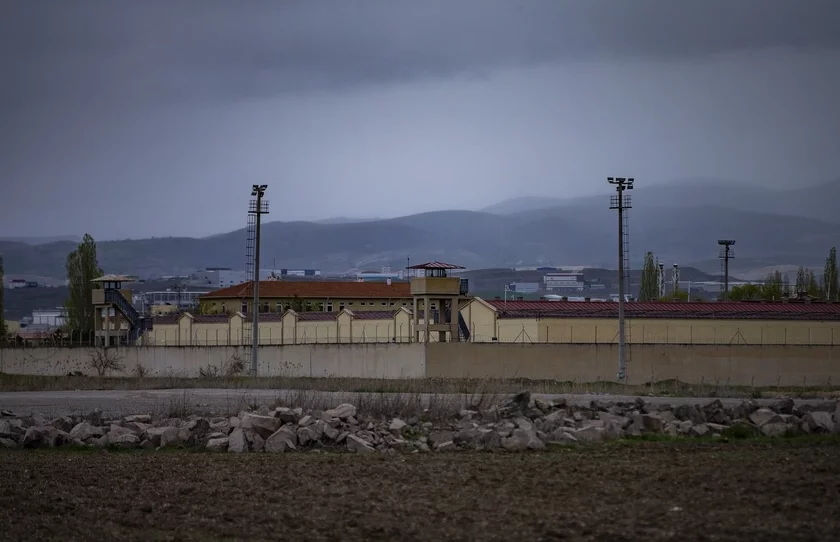
Illustrative photo: Ozge Elif Kizil/Anadolu Agency via Getty Images
«Go ahead, call the police»
According to Yegor, Alexander went to Turkey this spring. In Antalya, he went into a Decathlon chain store. Goods of the same brand were in his backpack, and some other items were already on him.
— Sasha had everything from this store, — says the man's friend. — He often shopped at this chain in different countries. He kept an eye on promotions, seasonal discounts, and so on. The items are the same everywhere, after all.
At the exit, the Belarusian was asked to show his backpack. Seeing that there were goods of the same brand inside, the guards accused him of theft and began to threaten him with police. The man then suggested looking at the CCTV footage, but no one did.
— Sasha said: «Go ahead, call the police». He hoped that they would come, look at the cameras, and let him go. What was there to fear? I also heard that the police in Turkey are reasonable, — says Yegor.
However, the arriving officers did not speak English and did not understand what the Belarusian was saying. As a result, the man was taken away and «processed into prison». The next day, a court session was held to decide whether he should remain behind bars until trial or if a non-departure agreement would suffice.
— The evidence in the case included a photograph of him entering the store and police testimony about the incident, — says the interlocutor. — Since he had no permanent address [in Turkey], there was nowhere to release him to. So he was sent to prison.
«He was in prison for nothing»
Initially, Alexander didn't understand why he was imprisoned, nor how long he would have to stay there. A few days later, he received a deportation order — even though the court hearing hadn't taken place yet. Soon, a date was set. The man spent several weeks in detention before his case was reviewed.
As the Belarusian later told his friend, the prison consisted of many closed blocks, resembling two-story houses. Each had a «living room», a kitchen, a bathroom, and seven bedrooms. In the center was an inner courtyard, open during the day.
Alexander notes that the food there was good: Turkish dishes were served — soups, rice, meat, fish, vegetables, fruits, and desserts. Vats of food were brought, and people shared the food themselves. All personal belongings were taken away, and phone use was time-limited. For entertainment — chess, TV, and football once a week, but gambling was prohibited.
Alexander later complained to Yegor that his block was overcrowded, with over 70 people constantly in it. Some of them slept on beds in the bedrooms, while the remaining 20-30 slept on the floor in the living room. Conflicts happened constantly.
— He said that people were there for a long time and were bored, — describes the interlocutor. — But there were almost no fights. It's strict there, with cameras everywhere: if you fought — consider your term extended. There was no single leader. Democracy. In principle, everyone was peaceful. Ordinary people.
According to Alexander's observations, most cellmates ended up behind bars due to drugs. Some were detained while transporting prohibited substances in their luggage or «on their person».
By the time of the trial, the Belarusian already had a lawyer. He suggested playing a trick and confessing to everything to be released faster.
— The point is that before the trial, they (the Turkish security forces) didn't even look for any evidence. The lawyer said that Sasha needed to confess to theft, otherwise the trial would be postponed, and they would investigate. But since there was no complaint, no theft, no damage — they would just release him, — describes the interlocutor.
And so it turned out. The store's camera recordings were not viewed in court. The prosecutor suggested releasing the man, and the judge declared him free.
— So he was in prison for nothing, — Yegor summarizes.
However, there was no release. Alexander was taken back to prison and released. But immediately sent to a migration center for those awaiting deportation.
«To get the hell out of this country and never return»
Alexander spent several days in the migration center. In a later conversation with his friend, he noted that this place differed greatly from a regular prison. A block system was also in place, with approximately 200 people in each block. There were no special rules; one could freely move within their block.
— There was a shop that worked a couple of hours a day, and public telephones — one could call until lights out. Lights out at ten, everyone is locked in. There was always a queue for the phone, — Yegor recalls his friend's impressions.
However, the food was worse than in a regular prison: meals were packed in portions that could not be called hearty.
As Yegor understood from Alexander's stories, some people lived in this center for a long time — they didn't want to leave Turkey and waited out the period required for legalization. According to Yegor's friend, there were also cases of deportation «for no reason».
— A guy was flying through Turkey in transit. His leg was broken, and his ticket [indicated he needed a wheelchair]. They didn't provide one during transit. In short, a female employee started shouting at him, and eventually, he shouted back. Five days in a deportation prison and then deported, — gives an example the interlocutor. — Another case: a man and his mother were flying in transit. They needed to re-register their luggage. After passport control, both were taken. It turned out he hadn't paid a fine in Turkey five years ago. Immediate trial and deportation. Both him and his mother. What does the mother have to do with it?
According to Yegor, his friend was initially promised that his return ticket would be paid for. But later they insisted that he pay himself. When it was time to leave the country, the Belarusian's belongings were checked several times at the airport.
— Sasha complained about the «shakedown» (thorough search), — recalls the interlocutor. — Employees threw away absolutely everything they didn't like. Like, «you are a deported passenger, so this and that are not allowed». And they didn't care. They threw away his expensive camping tent and titanium mug.
An employee of the local special services escorted the Belarusian to the airplane's boarding «sleeve» (jet bridge). From there, he was free.
Yegor says that his friend could have chosen any destination. However, he didn't know if his passport would have a deportation mark. And if it did, whether he would be able to enter another country with it. Therefore, he chose Belarus as the least risky option. By the way, the exit stamp he eventually received was «the most ordinary».
Why was the foreigner deported at all if the court released him? Formally, the man was recognized as «a person posing a threat from the point of view of public order, or public security, or public health». There was an opportunity to appeal the decision, but he did not want to deal with it.
— He said he wanted to get the hell out of this country and never return, — explains Yegor and adds that dealing with this case cost his friend about two thousand dollars. This included payment for lawyer's services and the return ticket.
At the same time, the Belarusian never received a written entry ban to Turkey. Will he ever risk going there again?
— I don't think so, — Yegor believes. — He said that in the coming years, he most likely won't go.
Now reading


Ihar Losik recounted how he was held in the KGB pre-trial detention center with a former delegate of the All-Belarusian People's Assembly — a police colonel who, while drunk, almost killed his wife


Comments
Распишет ситуацию, затраты, тюремный срок и депорт, свои доказательства, билеты, фото и видео из тюрьмы и депорта, контакты свидетелей и другие доказательства. И потребует компенсацию и извинения.
Самое сильное оружие против бюрократов - это ручка и блокнот. Не стесняемся их трючить.