


Laughter Yoga — is a practice that originated in Mumbai in 1995. It combines techniques of laughter for no reason, playful exercises, and yoga, and has thousands of followers worldwide.
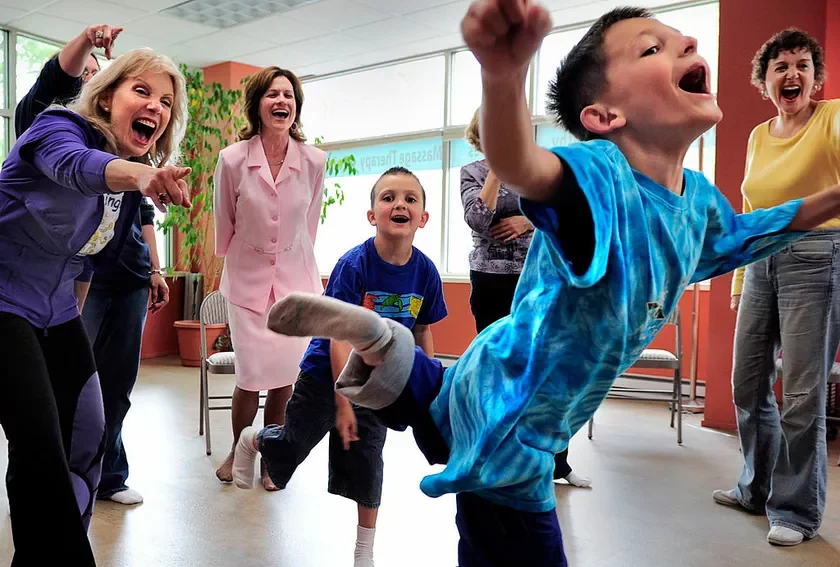
In today's world, full of stress and endless "must-do's," we're used to thinking that laughter is a rare happiness, a reaction to something—a good joke, a good show, or a comical situation. However, there is a practice that turns this notion on its head. It proves that laughter can be not a result, but a conscious choice and even a physical exercise.
This technique is called "laughter yoga" or "Hasya yoga." It is a unique exercise program based on three pillars: unconditional laughter (like in childlike playfulness), yogic breathing techniques (pranayama), and mindfulness meditation. Its creators claim that this comprehensive approach helps a person find harmony not only of the body but also of the spirit.
From a City Park to a Global Movement
The history of this movement began in 1995 in the Indian city of Mumbai. Family physician Madan Kataria, who had long been interested in the influence of emotions on health, together with his wife Madhuri, decided to conduct an experiment. They gathered a small group of just five people—themselves and three friends. Initially, their method was simple: participants took turns telling jokes to cheer each other up.
This model didn't last long. In a few weeks, the stock of jokes ran out, and some stories became tactless or absurd. To save the club and continue "joy therapy," Dr. Kataria turned to science.
He modernized and structured the ideas of the pioneers of gelatology (the science of laughter) from the 1960s and came to a revolutionary conclusion: laughter doesn't necessarily have to be a reaction to humor.
Laughter yoga teaches you to evoke joy "on command," using laughter as a tool for managing stress, generating optimism and positivity. You can't always rely on external triggers to laugh. Laughing for no reason is good. This was Dr. Kataria's main idea.
It is believed that laughter yoga helps to better manage stress through breathing practices. This allows you to absorb more oxygen, which activates the parasympathetic nervous system—your body's natural relaxation system.
Kataria created a system of forty basic exercises based on everyday situations that allow you to induce laughter artificially.

Later, this experience was described by him in the 2002 bestseller "Laugh For No Reason." The movement does not stop in its development: in 2021, Kataria's new book with updated scientific data and practices was released.
Today, this movement has grown. Laughter yoga is practiced in more than 120 countries around the world, and thousands of clubs operate both in-person and virtually—from university campuses and offices of large companies to nursing homes.
What Laughter Yoga Classes Are Like
Classes are usually held in groups under the guidance of an instructor. The atmosphere at such meetings is aimed at removing internal barriers, getting rid of critical self-assessment, and leaving your "ego" at the door.
A session often begins with rhythmic clapping—"one-two, one-two-three"—accompanied by rhythmic exclamations of "ho-ho, ha-ha-ha." This helps to warm up the body, activate the diaphragm, and tune the group to a single wave.
Next come play and imitation exercises. They may seem strange to an outside observer, but that is where their strength lies. For example:
Laughter as a greeting: instead of words, participants greet each other with joyful laughter and a handshake.
Silent laughter: an exercise where you need to laugh without sound, with your mouth wide open, often leads to an uncontrollable burst of real fun.
Laughter meditation: usually ends the session. You start with a slight smile, which gradually grows into a deep, spontaneous laugh, allowing you to completely clear your mind.
The whole process is closely intertwined with yogic breathing practices. Deep breathing allows you to saturate the body, and especially the brain, with oxygen. This activates the parasympathetic nervous system—the natural relaxation mechanism of our body.

Is Laughter Yoga Really Effective?
You've probably noticed that laughter can bring instant benefits, such as improving your mood. However, more and more attention is being paid to the long-term benefits of regular daily laughter. Healthline points out these benefits.
First, laughter releases endorphins and "happiness hormones" such as dopamine and serotonin.
In addition, it suppresses stress hormones such as cortisol. These effects are associated with better mood, pain reduction, lower blood pressure, a stronger immune system, as well as lower levels of stress and depression.
Moreover, when you laugh and others laugh next to you, it brings you closer to people. Laughter is also associated with feelings of safety and security, it allows a person to relax.
Many researchers believe that the body cannot distinguish between fake (simulated) and real (spontaneous) laughter. If this is the case, then it means that you can benefit just by forcing yourself to laugh.
A large meta-analysis of scientific publications showed that simulated laughter reduces depression levels and improves mood. The authors noted that laughter exercises require little cognitive effort and do not depend on the subjective perception of humor, which means that most people can easily participate.
Other studies have shown that laughter yoga can help temporarily reduce cortisol and stress levels, improve mood and energy levels, and form a more positive mindset. In fact, it may be as effective in reducing stress (by self-assessment) as aerobic exercise.
However, some experts argue that small sample sizes, subjectivity, and lack of consistency between studies make it difficult to understand how beneficial laughter yoga is for physical and mental health. More large-scale studies are needed to say for sure.
And, while laughter yoga can help support better mental and physical health, it shouldn't replace therapy prescribed by your doctor. Rather, it should be used in conjunction with traditional treatment.
Laughter Yoga Is Available to Everyone
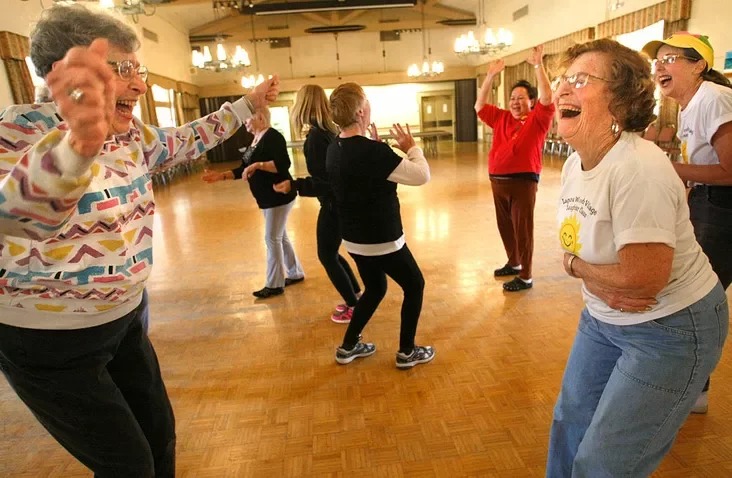
A great advantage of laughter yoga is its accessibility. You can even do it alone. Although it may be awkward to laugh in front of a mirror at first, in a few minutes artificial laughter becomes natural, bringing relief. To achieve a lasting effect, it is enough to devote only 10-15 minutes 2-3 times a week.
Thus, laughter yoga is not just a set of strange exercises, but a philosophy of life. Its main principle is that happiness is within us. And we can get the key to it at any moment, just by taking a deep breath and laughing.
Now reading


Ihar Losik recounted how he was held in the KGB pre-trial detention center with a former delegate of the All-Belarusian People's Assembly — a police colonel who, while drunk, almost killed his wife


Comments
Фраза "дазваляючы цалкам ачысціць розум" павінна прымусіць задумацца. Часам гэта карысна, зняць непатрэбнае напружанне, але пры сістэмным карыстанні? Лепш думалі б, як карысна запоўніць розум.
Артыкул пра цёмны бок медытацый ужо быў. Аднойчы чалавецтва разбярэцца і з гэтай хваляй трэнінгавага і інфармацыйнага псеўда-квазі-духоўнага махлярства.