


Dziatlava is home to a million-follower blogger who became popular thanks to his art.
Robert Asipuk is a millionaire blogger from Dziatlava whose work inspires children and adults. His creativity not only garners huge views on social networks, but also becomes a source of support and inspiration for many people who are discovering the world of art for the first time, writes «Grodnenskaya Pravda».
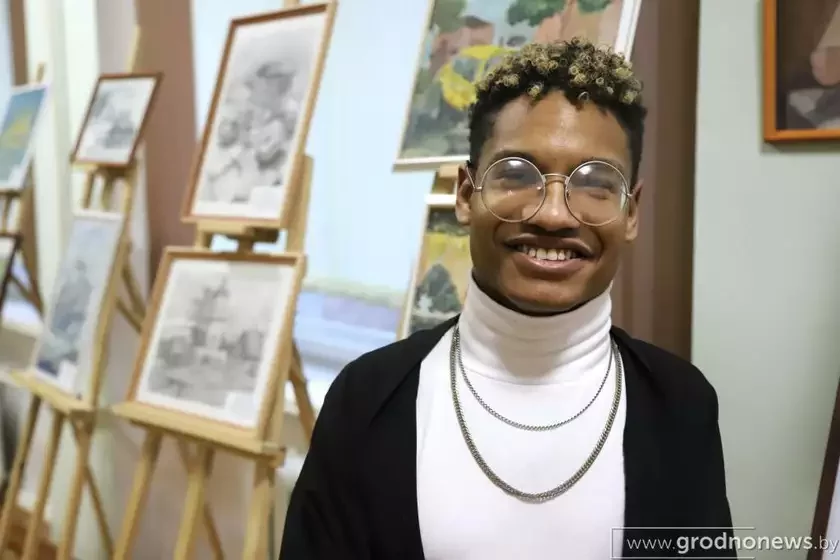
Robert didn't know his own family, he was raised in a boarding school until he was nine years old. But even as a child, his love for drawing manifested itself. The Belarusian language teacher was the first to notice the boy's talent and arranged a separate exam for him at art school. From there, his path to true creativity began.
The boy constantly drew for classmates in the after-school program, and his sketches on the school boards were too good for the teachers to erase. In competitions, however, there was little success at first, but patience and a desire to develop did their job — Osipuk gradually began to win prizes.
«There was a competition that we could never win — plein air in Lida. They didn't want to take me because of my physical characteristics: I had to live there for several days, move around a lot. But I really asked the teacher. As a result, the girl who was supposed to go got sick, and I was sent instead. It was the first major competition where I took first place. Our guys and girls had been going there for five years, but nothing worked out — the competition was very strong,» recalls Robert Osipuk.
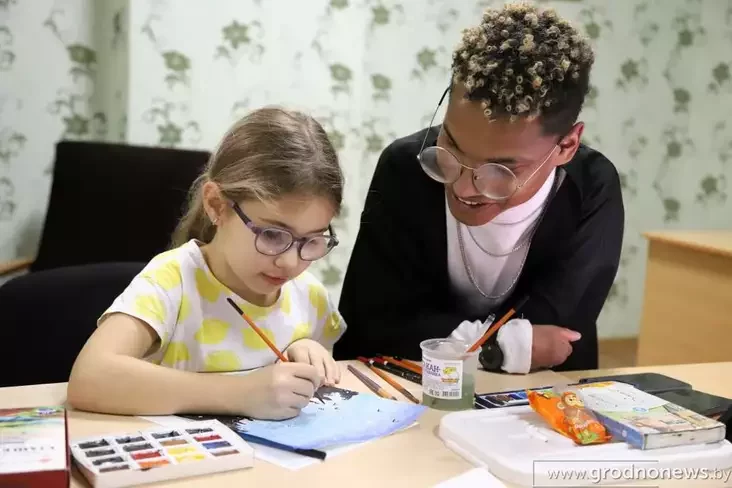
In his early youth, Robert was fond of space, later — nature. He was strongly influenced by a book with works by Ivan Shishkin, which he often brought to class to draw together with others. In college, he focused on cityscapes, and then moved on to portraits, trying to convey the emotions and character of people.
«For me, emotions are more important, because each time the technique is different. We even had a discussion with the curator. We studied academic drawing, and we were constantly told: you must build everything, measure everything. We did it. But the curator admitted that sometimes he himself doesn't know how to draw correctly. He tried to do a self-portrait strictly according to academic rules, and it turned out not at all similar. But when you draw from the heart, freely, like a sketch, it comes out much closer to reality. Therefore, the synthesis of knowledge and emotions is very important.»
Despite a clear creative path, he might not have chosen art: in the 11th grade, he thought about programming, but in the end he realized that he wanted to be a designer — and his parents supported his choice.
Today, Robert has more than 3.7 million followers on TikTok and almost 1.5 million on YouTube. He films the process of creating his works, communicates with the audience, and shares his thoughts. It all started in the summer after graduating from college, when free time appeared:
«I was sitting on TikTok and thought: maybe I should try something of my own? In two weeks, I gained 15,000 subscribers. I just drew what I liked. The only thing is that I used popular sounds so that the videos would spread better. I filmed all sorts of nonsense, mostly. Now those videos are hidden, but that's how it all started,» Robert shared. «I remember writing to popular bloggers. I was always very naive: I thought, now I'll write, they'll notice, advertise, and things will go well. And then it turned out that when I myself became popular, these bloggers were already writing to me.»
A big role in his growth was played by students from the Dyatlovo Center for Additional Education, where he started working. Robert didn't want to publicize his fame, but the children themselves found his channel, started suggesting ideas for videos — and these ideas were really successful.
Robert notes: you don't always need to focus on perfection — sometimes a simple, lively presentation looks more attractive than «polished» videos without soul.
«For many, the main difficulty is precisely in the presentation of content. When I was in college, there was a joke: if you do a job slapdash, you will definitely get 9-10, and if you sit, try hard — a maximum of 6. It's exactly the same with social networks. You can shoot beautifully, check every frame, but if there is no soul in it — it won't take off. Sometimes it is enough to simplify the content, to draw something simpler. In each case, you need to adapt to the viewer.»
His videos are watched by entire families. Subscribers aged 5 to 60+ write that thanks to him they started drawing or returned to creativity. Some say: «I grew up on your videos,» others call him a «legend.»
Robert, at the same time, draws not only for himself, but also on request. One of his latest projects is a collaboration with a Swiss activist who works with children with disabilities and supports schools in Africa. She was looking for a distinctive artist — and found him through an acquaintance from Minsk.
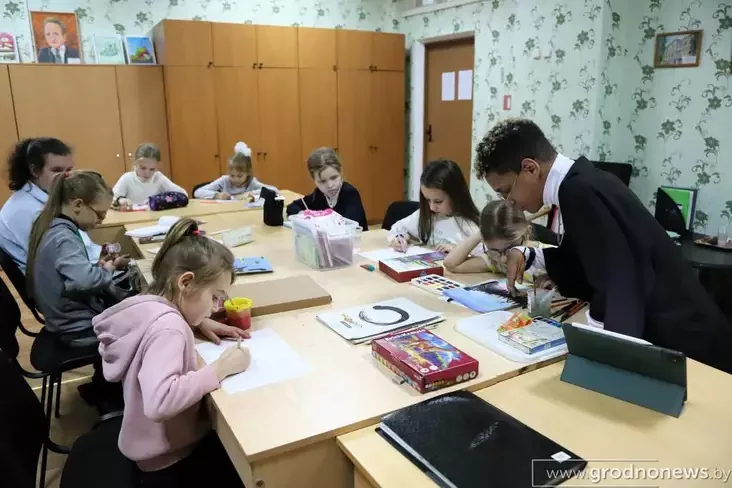
At work, Robert teaches computer graphics and fine arts. He has more than 50 students, including children with special needs.
At first, the role of a teacher seemed difficult, but over time he found his own approach: the main thing is not to pretend and not to try to seem like someone else. Children feel falsehood, and trust is the basis of learning.
«The most important thing when working with children is never try to deceive them. You need to be yourself, not pretend: either too adult, or strict, or kind. This creates a big dissonance. If you lose trust, you won't be able to build the educational process normally. I understood this and took it to heart. Now we have a very trusting relationship with the guys. I know that if a child has problems, he can always turn to me.»
After three months, he noticed that students began to actively send him their work from home. Creativity has become a part of their everyday life — and this is the best assessment of his work.
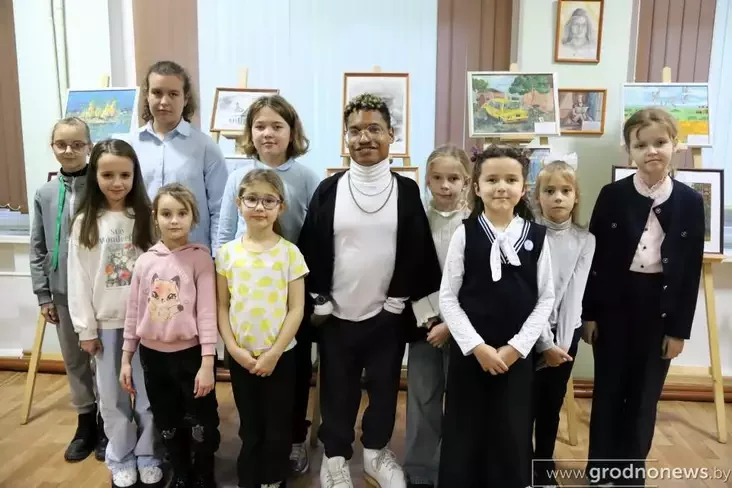
Osipuk believes that modern children often want instant results — and this is a problem. They see beautiful works of their peers on the Internet and begin to think that if they don't succeed quickly, then there is no talent. Robert explains: success takes time and work, even the most capable have difficulties.
Robert is not afraid of the development of neural networks. He is sure that they will become a tool, like Photoshop once was. Algorithms can help, speed up the process, but live paintings — oil, acrylic, watercolor — will always be valuable.
«I came across a phrase from one girl, also an artist. She said the same thing that they are saying about neural networks now, they once thought about Photoshop. But Photoshop did not displace artists and designers. Neural networks should be perceived simply as a tool that can help: automate some process, distract from the unnecessary and make everything much faster.»
Now reading


Ihar Losik recounted how he was held in the KGB pre-trial detention center with a former delegate of the All-Belarusian People's Assembly — a police colonel who, while drunk, almost killed his wife


Comments
[Зрэдагавана]