


A whistleblower saw satanic symbols in the Christmas decorations of a metropolitan shopping center.
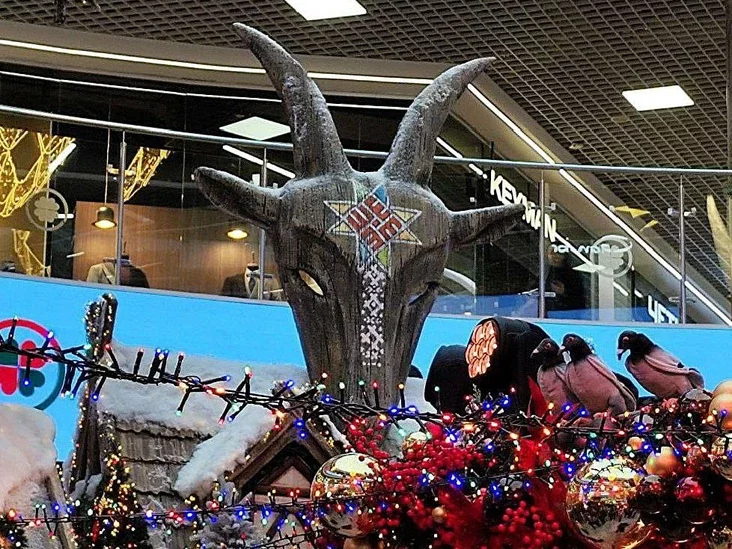
On the eve of Christmas and New Year, the capital's shopping center Dana Mall traditionally transforms into a large festive space with various installations filled with familiar characters and symbols of winter holidays. This year was no exception: a large-scale Christmas fair opened in the shopping center's hall.
In the center of the Christmas square is a large Christmas tree, around which are shops where mechanical fairytale characters "work." You can't actually taste the food there: both sbiten (a traditional hot honey drink), Smorgon bagels, and draniki (potato pancakes) are just mock-ups, albeit very convincing. Everything is carefully designed, labeled, and voiced in Belarusian.
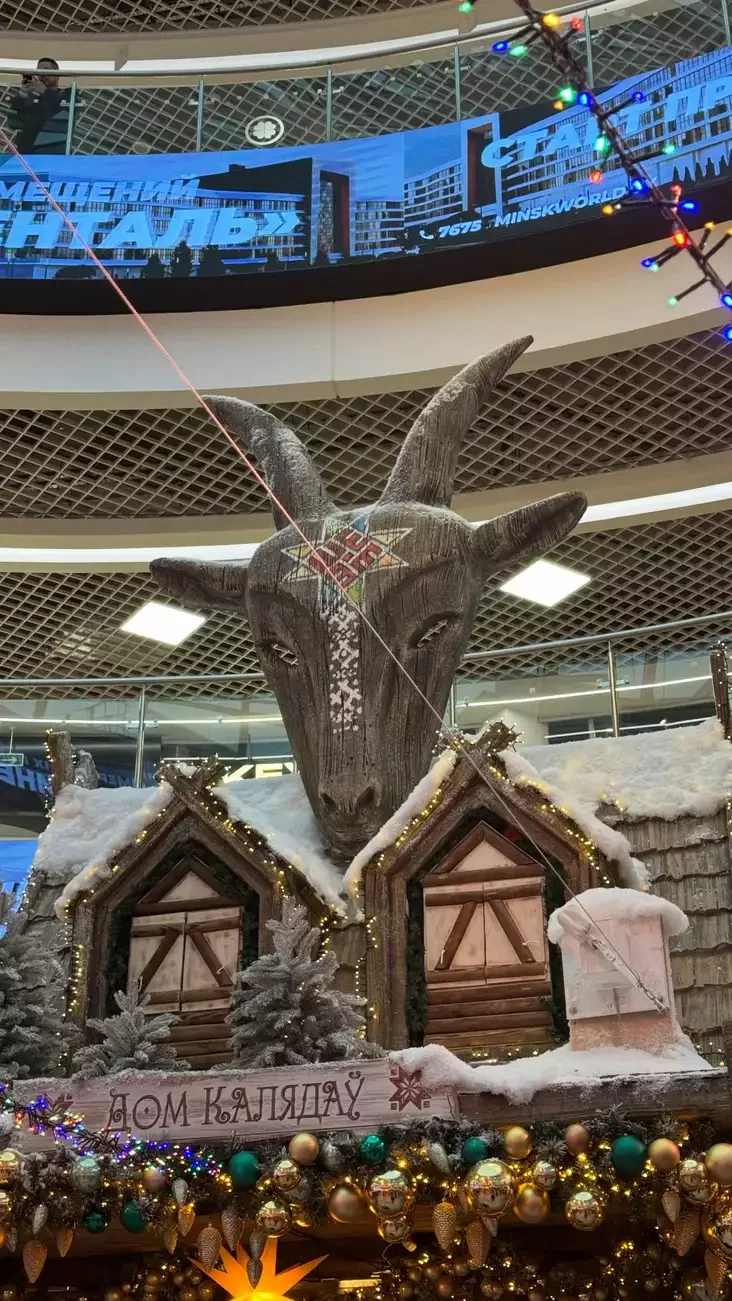

The current design of the shopping center also features many reinterpreted folk tales and Christian motifs. There is also the tavern "Pad vyasalym zubram" ("Under the Merry Bison") with a trophy head of the Bialowieza Forest beast, and the Belarusian Zyuza with sweet treats, and even Befana, a character from the Italian Christian tradition who, according to legend, initially did not help the Three Kings find the Baby Jesus, and then felt guilty and decided to find him herself—and has since been bringing gifts to homes where there are children.
Here you can also see a multimedia Batleyka (a Belarusian puppet theatre), over which stands a tower with a cross, and around it is a manger with the Baby Jesus and moving angels proclaiming the birth of the Savior.
Demons in the Eyes of the Possessed
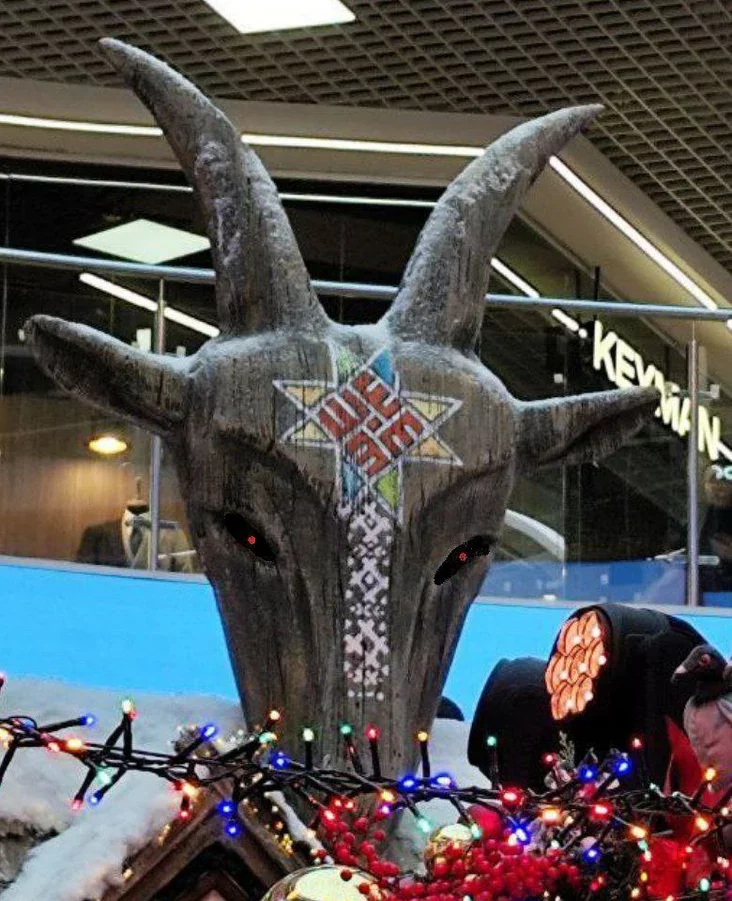
However, not all visitors were able to appreciate the festive atmosphere. The pro-Russian informer Olga Bondareva and her associates, outraged by the absence of the characters Ded Moroz (Father Frost) and Snegurochka (Snow Maiden) introduced by the Soviet authorities in the 1930s, saw in the decoration something that is especially close to their ideological circle—"the head of Baphomet," one of the symbols of the modern Satanist movement, allegedly decorated with pagan symbols.
In reality, it is a large goat mask—an obligatory attribute of traditional folk caroling, when young people and children led a goat dressed in a sheepskin coat and with a corresponding mask (and sometimes a bear or a mare) from house to house. The star on the goat's forehead symbolizes the Star of Bethlehem. And such a "symbol of Satanism" as an ornament is present on the official state flag.
Baphomet—an Image of Muhammad in Christianity
And even with the image of Baphomet himself, everything is not so clear-cut. This demon is not mentioned in any religious texts, and his appearance has a much more interesting story.
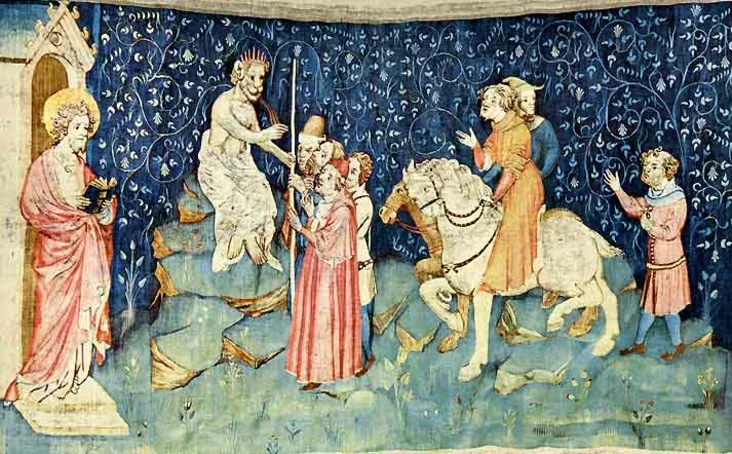
The name "Baphomet" first appeared in the text of a French crusader who described the siege of Antioch in 1097–1098, where the Seljuk Turks were defending. The crusader wrote that in the morning the inhabitants of Antioch loudly invoked Baphomet. As you can easily guess, the Muslims in the besieged city were referring to Muhammad—this is a typical hearing error, or mondegreen.
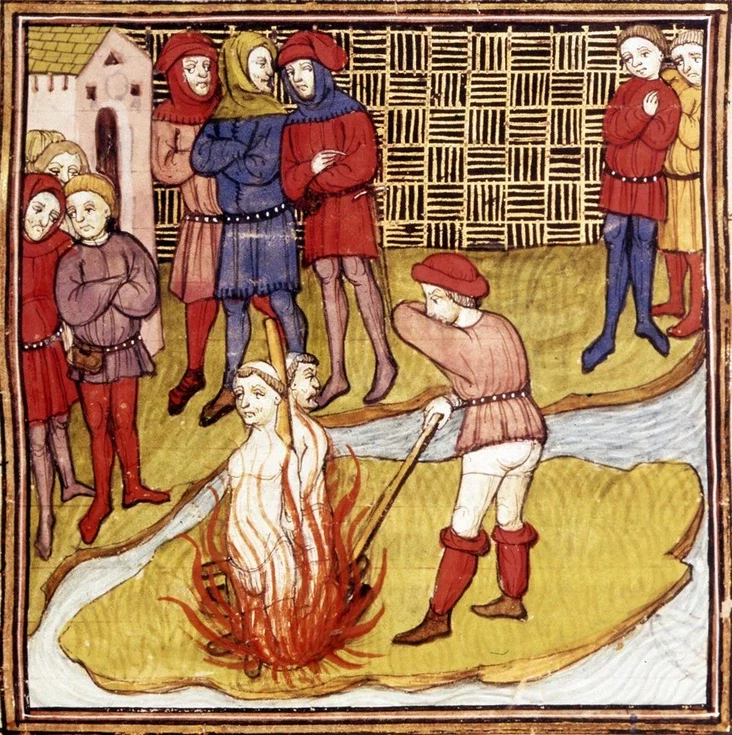
The distorted name of the Islamic prophet was spread throughout Europe by troubadours. But it could have been lost in history if the worship of the "deity Baphomet" had not become one of the charges against the Templars, the trial of whom has been troubling the European public for more than a century.
Occult Image

In our time, Baphomet is known primarily thanks to the occultists of the 19th century. The modern anthropomorphic image—a creature with a human torso, a goat's head, with horns and an inverted pentagram on its forehead, and goat's hooves instead of feet—was created by the French occultist Éliphas Lévi in 1854. It was his drawing that became key in the formation of the modern iconography of Baphomet.
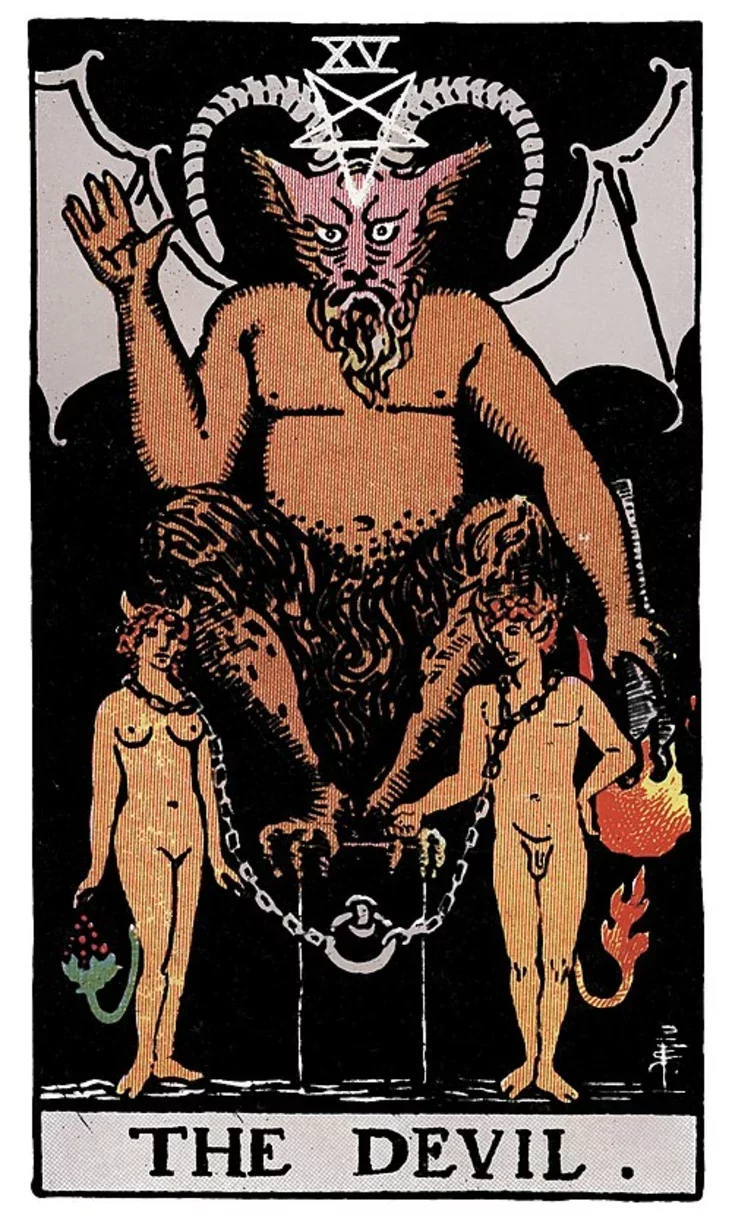
Later, Lévi's image influenced wider culture through the popular Rider-Waite Tarot deck, developed in 1909 by the esoteric writer Arthur Edward Waite and the artist Pamela Colman Smith. Although the figure on the "Devil" card in this deck does not copy Lévi's drawing exactly, it is clearly inspired by his ideas: a human body with a goat's head.
It was through this deck, which became the most widespread in the 20th century, that the image of Baphomet first entered the mass consciousness.
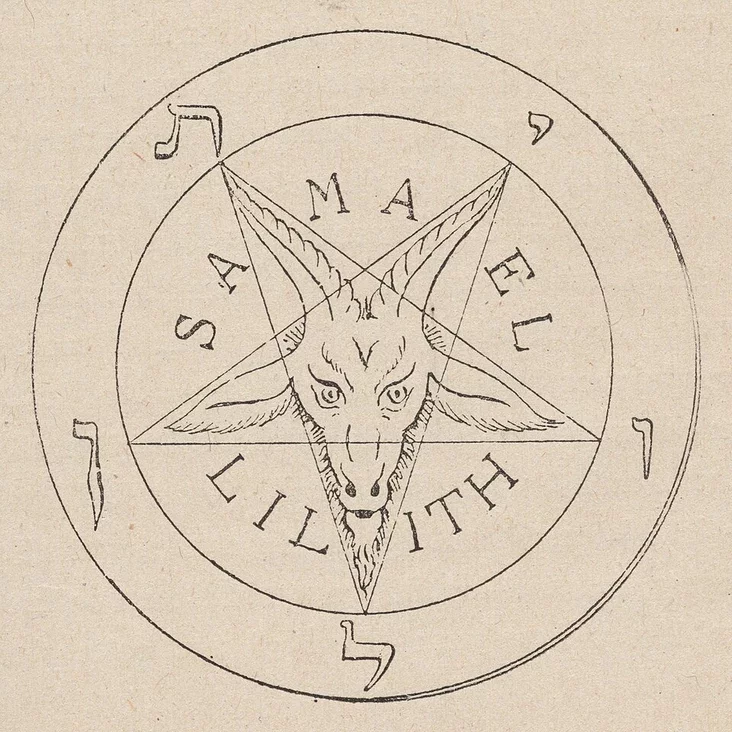
In the 20th-21st centuries, this visual archetype, created by Lévi and popularized by the Tarot, was widely used in horror films, mass culture, and in Satanist groups, who made the "sigil of Baphomet" their symbol.
But Baphomet has nothing to do with Belarusian Christmas masks and rituals that existed long before the emergence of this entire occult visual canon.
Pagan Legacy of a Christian Holiday
Science has not precisely determined either the historical year of the birth of Jesus Christ or the date of his birth—nor the date of the establishment of the feast of the Nativity of Christ, which is known only from the 4th century.
The most well-founded view seems to be that the feast of the Nativity of Christ arose as an attempt to displace or reinterpret pagan holidays, the dates of which in most cultures fall on the most important moments of the sun's movement across the sky—the solstices and equinoxes.
The winter solstice in the Roman calendar fell on December 25 (according to today's date—December 21-22). Similarly, the Annunciation was placed on the day of the vernal equinox in the Roman calendar—March 25.
So the pagan heritage is naturally woven into the Christian tradition, and the appearance in the practice of celebrating Christian holidays of elements of folk culture, which could indeed originate from pagan rituals, is not something unusual, since their original meaning has long been forgotten and supplanted by Christian meaning.
«Nasha Niva» — the bastion of Belarus
SUPPORT US


Comments
Традыцыйны = дахрысціянскі = паганскі = дэманічны
U pahanski čas Piarun haniaŭ čarciej, baroniačy śviet, tolki tak, až šum stajaŭ, i ciapier haniaje... A chto jamu zabaronić, i z jakoha baduna ?
To bok, nia treba lia-lia, tradycyjny nie aznačaje demaničny...