


U.S. President Donald Trump is preparing to deliver a televised address in which he plans to declare that the war with Iran, which has been ongoing for about a month, is coming to an end. He will argue that the main objectives of the American military operation have been achieved and will present this as a success of his policy, writes Politico.
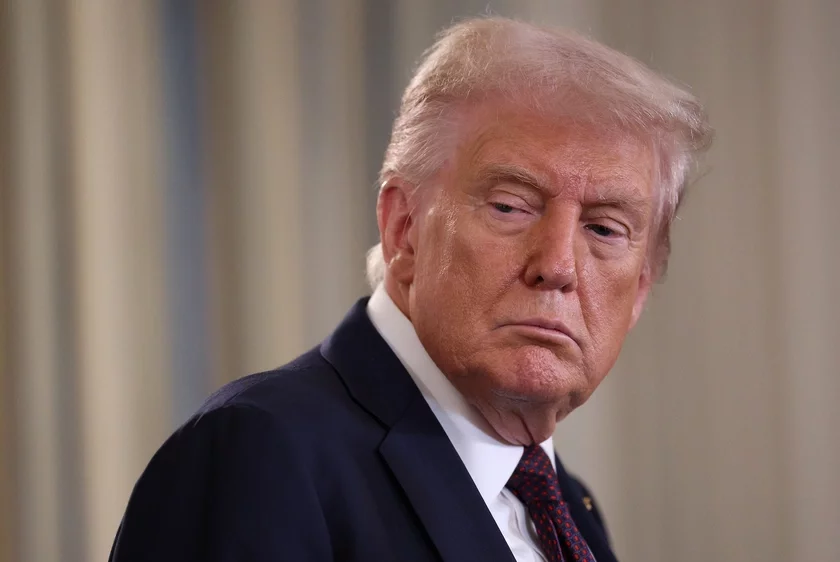
Donald Trump. Photo: Win McNamee / Getty Images
Over the past day, Trump has repeatedly hinted at such an outcome — through interviews, social media, and public appearances. According to information from his inner circle, in his speech, he plans to declare an effective victory and outline further steps for the U.S., including the possibility of a swift exit from the conflict.
He will pay special attention to the problem of the Strait of Hormuz, through which a significant portion of global oil supplies passes. Iran continues to restrict navigation in this region, which has already led to a rise in oil prices (over $100 per barrel).
Trump does not plan to take full responsibility for solving this problem and wants to shift it to the countries of Europe and the Persian Gulf, arguing that they should ensure access to energy resources themselves.
His former advisor Steve Bannon notes that Trump is effectively acting on the principle of "veni, vidi, vici" (I came, I saw, I conquered): declare success, secure the achieved results, and gradually conclude U.S. involvement in the war. At the same time, it is not ruled out that Washington will try to achieve a ceasefire.
Trump's speech comes against a backdrop of growing dissatisfaction with his actions domestically. The war with Iran does not enjoy widespread public support, and rising energy prices are causing concern among both voters and financial markets. Therefore, his statement may be an attempt to calm the situation and show that the conflict is nearing its end.
Despite Trump's words about progress in negotiations with Iran, there are no real signs of a swift agreement. Moreover, some representatives of the Iranian leadership claim that no negotiations are taking place at all. Trump himself states that Iran is allegedly asking for a ceasefire, but the U.S. is ready to consider it only after free navigation in the Strait of Hormuz is restored.
Simultaneously, the U.S. continues to strengthen its military presence in the region — approximately 2,500 more Marines are being deployed there. This appears contradictory in the context of statements about a swift end to the war but may indicate a desire to strengthen positions before potential negotiations.
A significant part of Trump's public rhetoric is criticism of European allies. He is dissatisfied that NATO countries have not supported the U.S. in this war and are even restricting the use of their military bases and airspace. The decisions of Italy and Great Britain, which did not allow American forces to use their infrastructure, caused particular irritation.
Trump even threatens to reconsider the U.S. role in NATO and does not rule out the possibility of withdrawing from the alliance, although this would require Senate support, where NATO enjoys broad backing. He also calls the alliance weak and questions its effectiveness.
In Europe, however, such statements are received calmly and without particular panic. European officials believe that Trump is trying to shift responsibility for the difficulties of the war onto allies and justify his decisions. They also note that the U.S. increasingly views relations with partners not as an alliance based on shared values, but as pragmatic cooperation where financial and political benefits play a significant role.
Now reading


Why are Americans so eager to go to the Moon, what will they extract there? And what does it mean for Belarusians? A Belarusian astrophysicist explains


Comments
2. Іранскі рэжым зрынуты ✓
3. Іранская нафта сканфіскавана ✓
4. Праліў ізноў адкрыты для суднаходства ✓
5. Іранскія атакі на базы ЗША і суседзяў спынены ✓
Гуды не кінеш - паўсюль эпічная перамога Трапар.
Адно пытанне: калі і дзе Іран будзе падпісваць капітуляцыю?