


"Patient and hardworking, like the Chinese." How a Chinese Master of Belarusian Philology sees Belarusians
28-year-old Chinese Master of Belarusian Philology Xu Bailong has burst into the Belarusian media space. In August, he began publishing Belarusian-language reels on his Instagram , which quickly attracted attention and gather hundreds of likes. And now, the publication Devby.io has interviewed him.
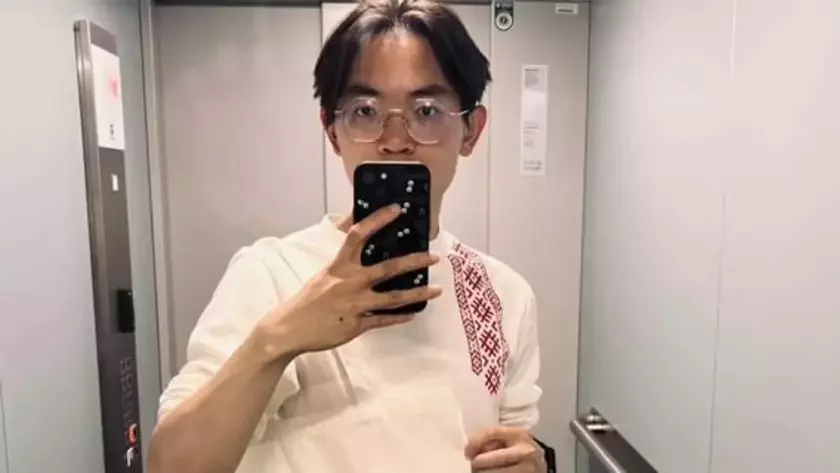
It's interesting that Valentin (the name the philologist chose for communication with Europeans) creates his reels without any fashionable effects or templates. He simply talks to the audience about Chinese culture, as well as the difficulties foreigners face when learning the Belarusian language. And he speaks beautiful Belarusian with a perfection that you subconsciously don't expect from someone from the opposite side of Eurasia.
This is the Instagram magic of Xu Bailong: Belarusians are attracted by the Chinese man's very desire for everything Belarusian, his respect for our language and culture.

And how does the Chinese linguist, who completed his bachelor's degree in Russian in China, his master's degree in Belarusian in Minsk, and is now pursuing a second master's degree in Ukrainian in Krakow, perceive us, Belarusians? We talked to him about this.
"I know Belarusian, Ukrainian, Polish, and Russian at B2 — C1 level"
— Please tell us a little about yourself. Where was Xu Bailong born and raised in China?
— I was born in Yunnan province, in the provincial capital city of Kunming (this is in the southwest of China). I went to school and grew up there. After that, I entered university and went to Beijing for my studies. I spent four years there.
— In your family, did you speak Putonghua or a local Chinese dialect? Do you know different variants of the Chinese language?
In my family, they speak a local Chinese dialect. My parents have problems with Putonghua. I only know my dialect and Putonghua, as other Chinese dialects are difficult for me. I didn't even learn the Beijing dialect in four years.

Kunming. May 2024. Photo: 瑞丽江的河水, CC BY-SA 4.0, commons.wikimedia.org
— And how many languages do you know now? And at what level each?
— I know Belarusian, Ukrainian, Polish, and Russian. I know each of them at B2 — C1 level. I also know English, but passively; I studied it in school for over ten years. But I didn't need it, and I didn't have practice.
— Where did your interest in Slavic languages come from?
— It all started by chance, because in China, future students cannot freely choose their specialization. You can choose from the offered ones, and there are only a few. And in the year I finished school, Russian happened to be in that list. I had been interested in Cyrillic for a long time before that (because it looks unusual and exotic). And I chose Russian.
When I enrolled, it turned out that all around me were practical people who ended up there (meaning, chose Russian philology) not because they were genuinely interested in it. But because they simply saw career prospects in this specialization. China and Russia have good relations, and thanks to that, there were many relevant vacancies in state structures. One could say that no one was interested in anything other than a competitive advantage for jobs.
And Ukrainian and Belarusian languages — for a known reason — were the only field where there was no stench of rat race. And where one could draw true pleasure from one's interest.
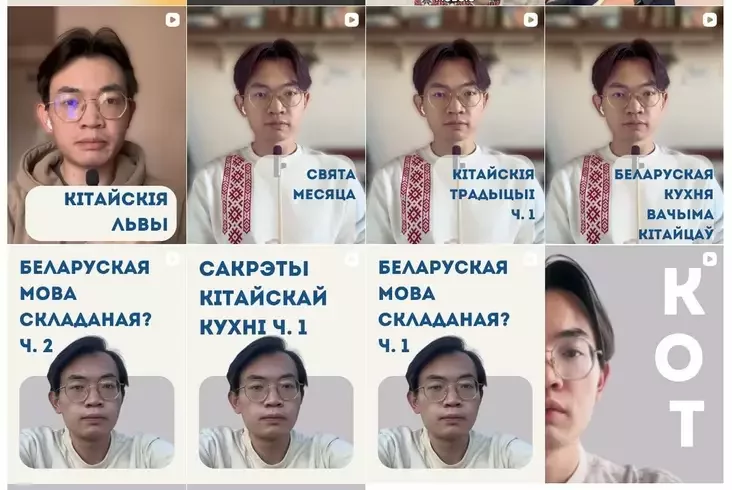
Reels on Valentin's Instagram
— How many people in your university in China attended the optional Belarusian language course with you?
— Few people attended. At that time, there were only five people at the Belarusian optional course.
But there was an entire army of people who studied Russian. Fewer people studied Polish.
— What are the most popular languages to study at your university and other universities in China?
— English and Russian.
"Ordinary Chinese people often confuse Belarus and Russia"
— During what period did you live and study in Belarus?
I lived in Belarus from 2019 to 2021.
— How much did you know about Belarus and Belarusians before coming to our country?
— About Belarus, I only knew what was written in textbooks and Chinese social networks. Ordinary Chinese people often confuse Belarus and Russia, even sometimes consider (intentionally and unintentionally) that Belarus is part of Russia. Chinese people enroll in Belarusian universities if something doesn't work out with admission to prestigious Russian universities.
When my Chinese colleague was finishing her studies in Belarus and choosing souvenirs for her family, she chose a matryoshka doll. When I suggested towels or linen products, she replied: "What's the difference? Belorussia and Russia are the same thing."
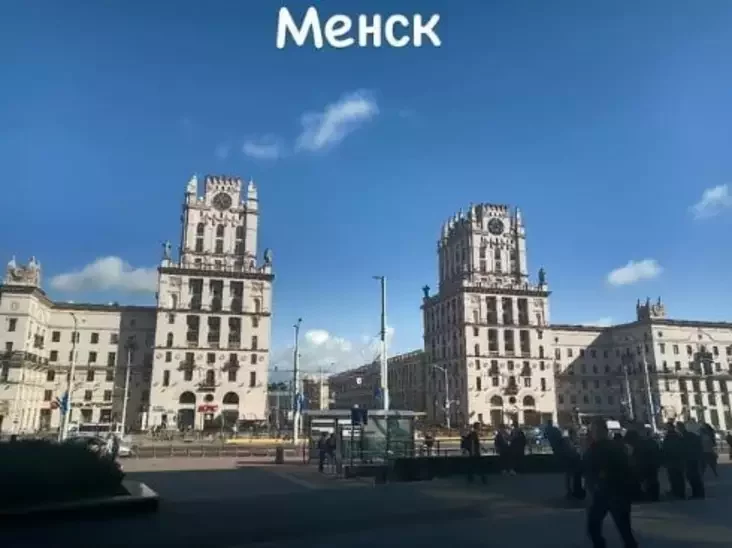
One of Xu Bailong's Instagram posts
— Are there any stereotypes among Chinese people about us? If so, which of these stereotypes proved true and which did not?
— Your country also attracts Chinese people because a lot of Soviet heritage has been preserved in Belarus (as strange as that may sound). This stereotype proved true: bureaucracy in Belarus was terrible.
— In one of your previous conversations with journalists, you said that Europeans are more open and sociable, while Chinese people are more modest and reserved. Have you learned to distinguish some Europeans from others during your years in Europe?
— I think that people from Western Europe are even more open and sociable. And Slavs, compared to them, are more reserved.
— Are there any character traits or behavioral peculiarities that you specifically highlight in Belarusians?
— I believe that Belarusians can be distinguished from others by the fact that they behave very quietly and attentively. They speak in a quieter tone. They follow all the rules. They don't want to attract attention to themselves.
— Have you noticed any common traits between Belarusians and Chinese people?
— Belarusians and Chinese people are united by patience. If life somehow more or less goes on, then you can always put up with more than enough.
I also think that Belarusians are indeed more hardworking than their European neighbors. And for Chinese people, hard work is sometimes a way of survival in competition.
— You also mentioned that while studying the Belarusian language, you felt a cultural connection between Belarus, Ukraine, and Poland. Could you please tell us what you saw this connection in? Only in languages, or in something else as well?
— Primarily in languages. I have the feeling that Belarusian and Ukrainian have more in common with Polish than with Russian (this is my subjective feeling). The same applies to architecture and traditional clothing. In Russia, the style is completely different: "onion domes," "kokoshnik." I know about this because I lived in Moscow for a year. During that time, I visited Suzdal, Vladimir.
And also, the connection between Belarus, Ukraine, and Poland is in the shared history of the Polish-Lithuanian Commonwealth.
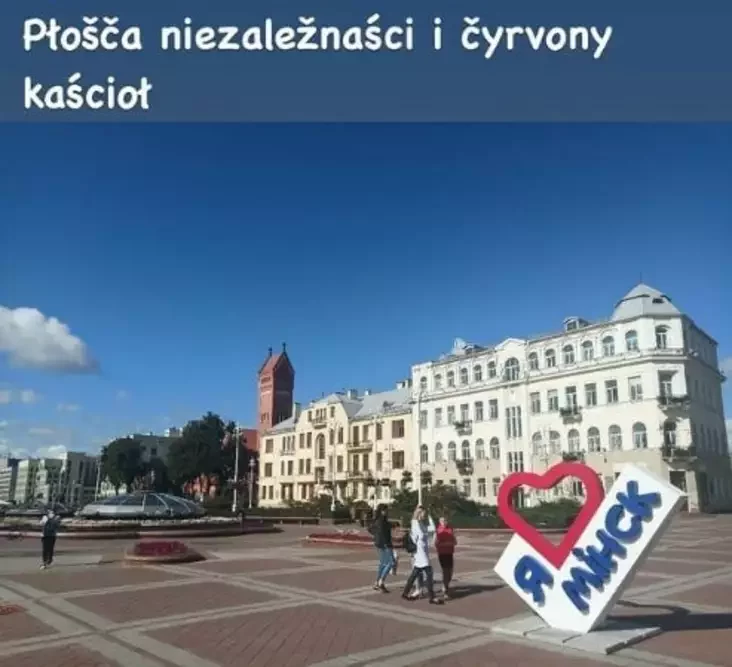
One of Xu Bailong's Instagram posts
— According to your learning experience, which language seems closest to Belarusian?
— Ukrainian.
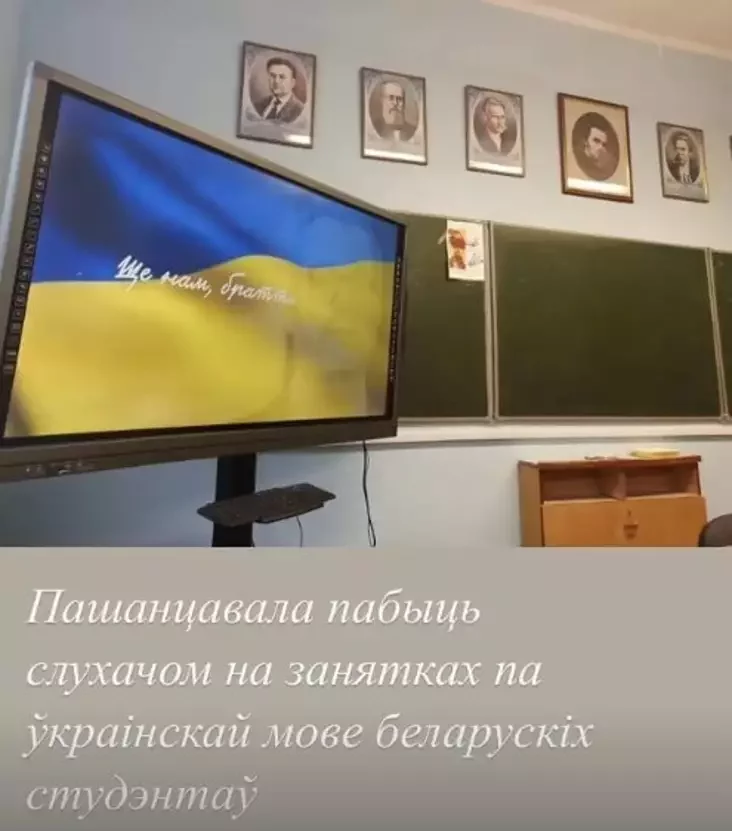
One of Xu Bailong's Instagram posts
— When you studied in Minsk, how often did you meet Belarusians who spoke Belarusian? Were you surprised that there were so few such people in Belarus?
— Almost never met them. What surprised me more was not so much the number, but the unusual attitude towards the Belarusian language, even when foreigners speak it or try to speak it. Although not in everyone, even isolated cases were truly striking.
— Which Belarusian traditions seemed most unusual to you?
— During my studies in Minsk, I didn't have the opportunity to get acquainted with Belarusian traditions. And sometimes many local traditions are more Soviet than Belarusian. But I remember watching on YouTube how in the village they removed a scarecrow in the form of a "grandfather" and sent it somewhere, or buried it like a deceased person. And they used a carrot as a male organ.
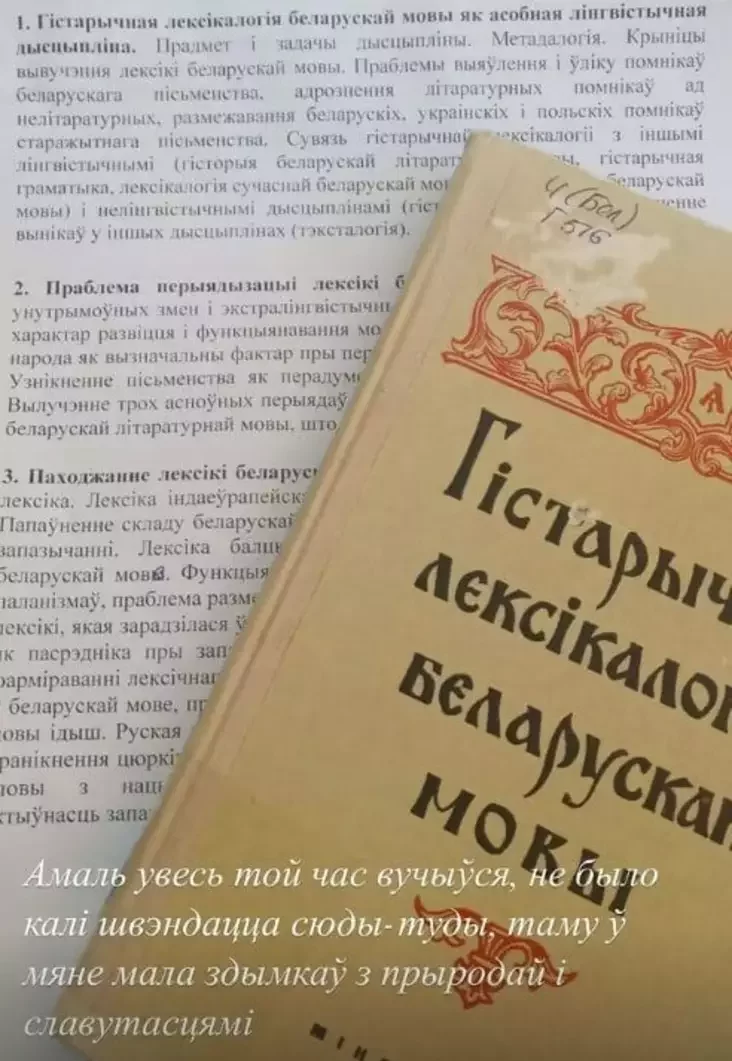
One of Xu Bailong's Instagram posts
— And how does Belarusian food taste to a Chinese palate?
— To a Chinese palate, Belarusian food is a bit bland. Because Chinese cuisine uses intensely flavored spices that are not found in Europe.
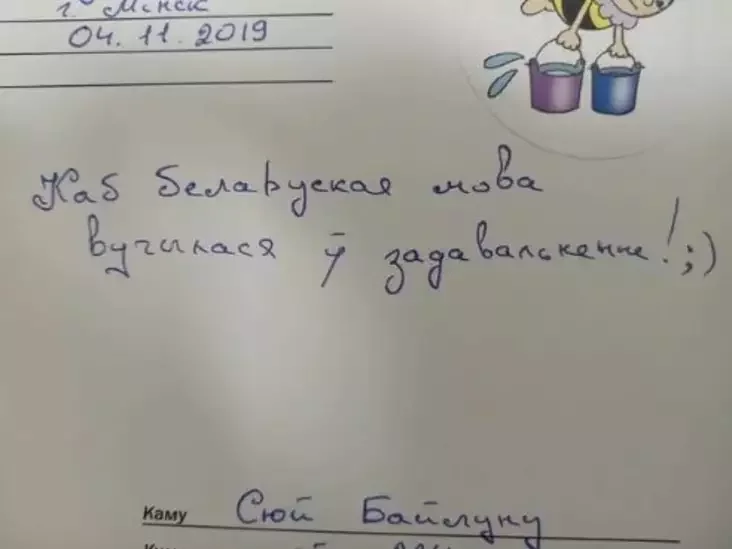
One of Xu Bailong's Instagram posts
— You mentioned that you liked "King Stakh's Wild Hunt." Is there a Chinese writer you could compare to Vladimir Karatkevich, the author of "The Wild Hunt"?
— It's hard to draw such a parallel. "King Stakh's Wild Hunt" presents to me a neglected noble part of Belarusian culture. And now this part is forbidden and lost. There was no such rupture in Chinese culture.
— And who is your favorite Chinese writer?
— Among Chinese writers, I most love Lu Xun, because many problems reflected in his works are still relevant today.
— In Europe and among Belarusians, Chinese literature is not very popular. But in recent years, the science fiction writer Liu Cixin became famous with his trilogy "The Three-Body Problem." Do you like his work?
— He is also famous in China, but I am not interested in science fiction.
"Xenophobia and racism speak more about the narrow-mindedness of a person"
— Have you encountered any manifestations of xenophobia or racism during your life in Belarus and Poland?
— Neither in Belarus nor in Poland have I ever encountered xenophobia or racism. Xenophobia and racism speak more about the narrow-mindedness of a person, so I don't worry about it.
— In your opinion, are Belarusians a tolerant people?
— Belarusians are a very tolerant people, that cannot be denied.
— How do you think, does belonging to the world's largest nation somehow influence the national character of Chinese people, their worldview?
— I believe that the population size probably doesn't affect the mentality of Chinese people at all. Perhaps only the idea that "the population is large, and resources are scarce, so we must 'settle for less for the common good'." Because of this, people feel less important.
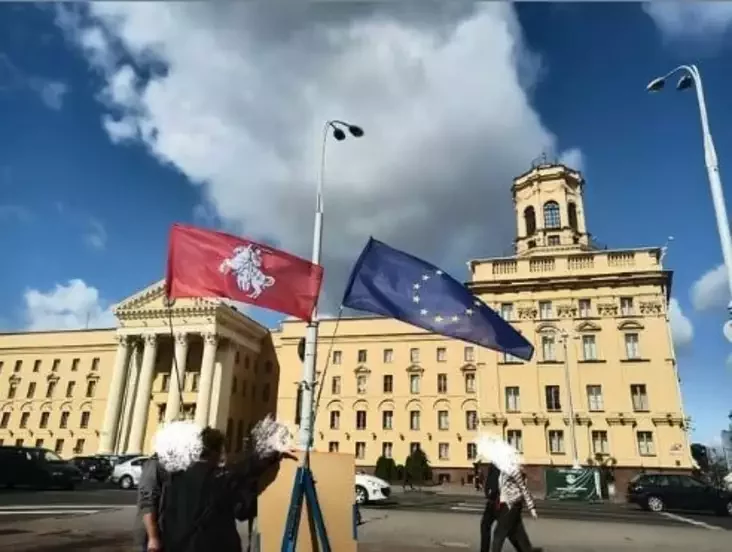
One of Xu Bailong's Instagram posts
— Would you feel less comfortable and at ease if you belonged not to a billion-and-a-half-strong ethnic group, but to a small nation whose language is on the verge of extinction?
— I would not feel less comfortable and at ease, because, firstly, a large number of "us" does not add any sense of security. Secondly, comfort comes from whether society respects human dignity, whether it respects individualism, and whether a person can be themselves in it.
"It's a pity to see Belarusians disappearing as a nation"
— In your opinion, does the command and use of one's native language relate to people's national self-determination?
— Of course, it relates. Language is part of national identity. A psychological boundary between "ours" and "theirs" runs through it. This is clearly visible in the examples of Russians, Poles, and (today) Ukrainians.
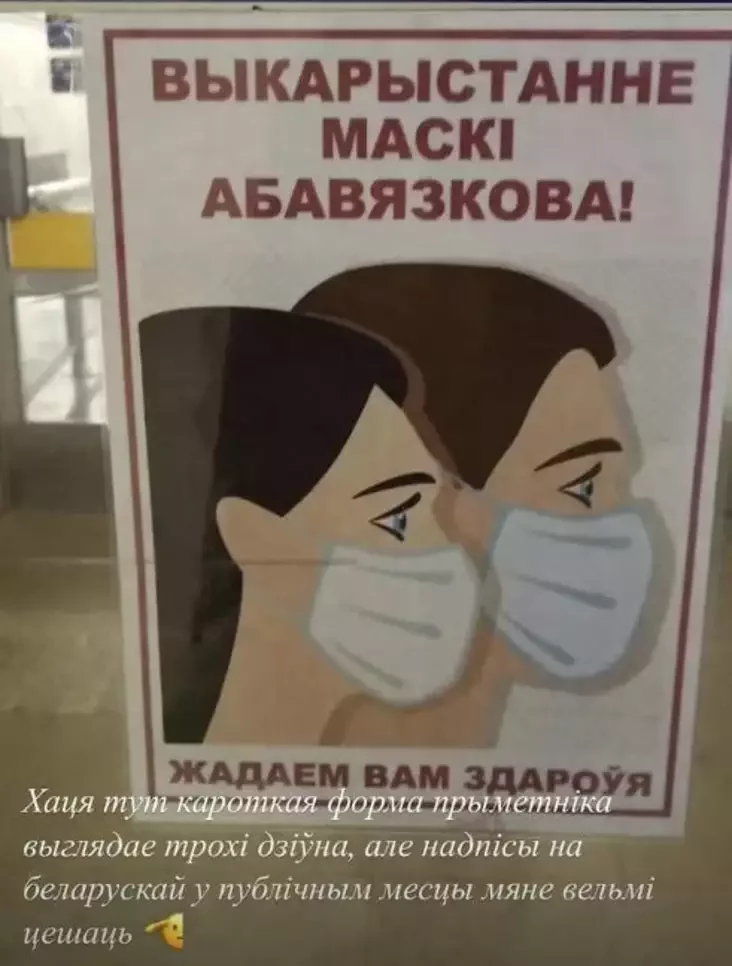
One of Xu Bailong's Instagram posts
— Does the Chinese language help Chinese people in China and Chinese diasporas (in Singapore, Malaysia, USA, and so on) feel like a unified nation?
— It does not help them feel like a unified nation, at least not politically. It is, rather, a kind of cultural connection. Culturally they are their own, but they do not belong to a single nation. Politically they are foreign.
— Do you think Belarusians in the diaspora need to be interested in their language and preserve it to remain Belarusians?
— They need to. It's a pity to see Belarusians disappearing as a nation.


Comments
Ящо адин экстрэмист из брацкага Китая !