


Ukrainian operation "Spiderweb" could have failed at the last minute — a vigilant truck driver found drones in the cargo body
But he was convinced that everything was as it should be.

The operation, coordinated by a married couple of agents in Chelyabinsk, was on the verge of failure in the final days of preparation when the driver of one of the trucks transporting the drones found the unmanned aerial vehicles.
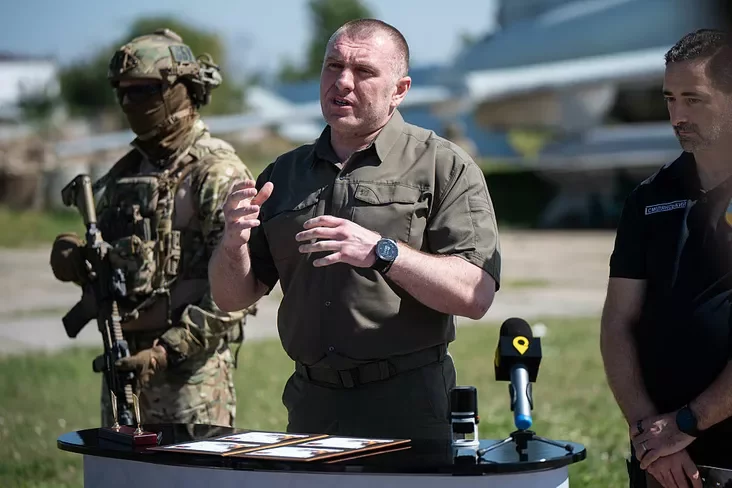
As WSJ writes, it all began in the autumn of 2023 when Volodymyr Zelensky called the head of the SBU, Vasyl Maliuk. Russia was terrorizing Ukrainian cities with missiles from aircraft that were outside the range of Ukrainian air defense, and interceptors were critically scarce. It was decided to strike at aircraft on the ground. However, conventional long-range drones had limited power, so the SBU developed a plan to launch them directly from Russian territory.
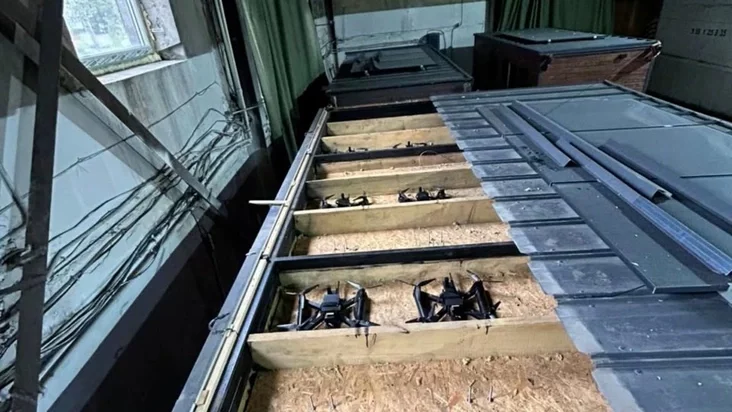
The idea arose to use prefabricated modular houses, the size of a sea container, transported on trucks, as launch pads for drones. For the roofs, under which the drones were hidden, engineers created a unique locking system. The mechanism was designed so that the panels would automatically slide open upon receiving a remote signal. The houses themselves were equipped with batteries and solar panels to maintain communication with Ukraine and keep the drones charged.
The Security Service of Ukraine initially planned to conduct the operation by Victory Day, but it had to be postponed due to an unexpected problem. Several truck drivers involved in transporting the cargo, whose contents they did not know, got drunk during the long holidays — Easter, May 1st, and before May 9th. This human factor almost thwarted the plans for a synchronized attack.
As a result, five trucks with drones departed for military airfields in the Ryazan, Ivanovo, Murmansk, Irkutsk, and Amur regions from Chelyabinsk later — from May 23rd to May 26th.
Incident on the highway and tragedy with the driver
The operation was on the verge of failure when the roof of one of the trucks came off 290 kilometers from Chelyabinsk. The unsuspecting driver stopped and found hidden drones inside the "house." In a panic, he called the owner of the logistics company, Artem Timofeev, who secretly coordinated the operation under the SBU's guidance.
Calming the driver, Timofeev contacted an SBU officer, who consulted with Maliuk. In Kyiv, at that moment, tension reigned: what if the truck driver couldn't put the roof back? What if Russian special services were watching him? What if he told his wife, and she told friends?
It played into the hands of the Ukrainians that the truck driver could not see the explosives hidden with the drones — they were integrated into the bodies of the devices.
The head of the SBU, Vasyl Maliuk, who planned the attack, came up with a more or less plausible explanation, which Timofeev conveyed to the driver: the house was intended for hunters, and the drones were for tracking animals. The truck driver believed this version, put the roof back in place with the help of a local tractor driver, and sent a photo with the caption: "Closed." Operation "Spiderweb" continued.
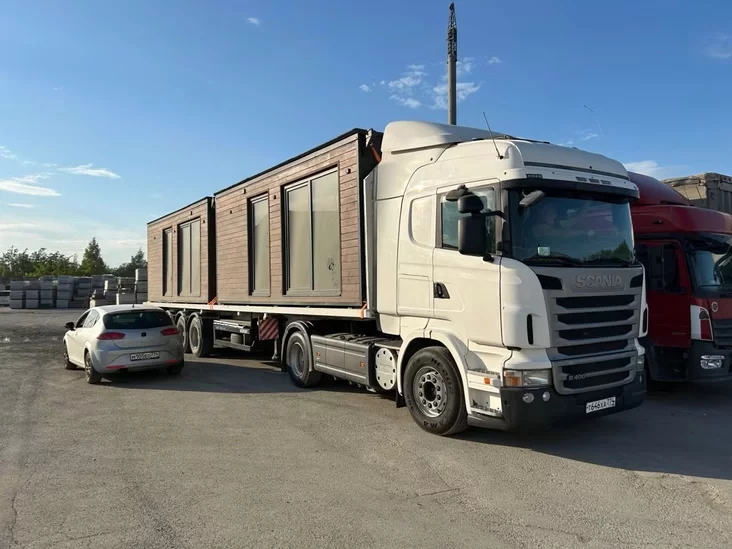
Another problem arose during the operation — communication with the cabin of one of the trucks proved unstable. This was a vehicle that had to be replaced at the last minute due to the breakdown of the primary one. SBU officers tried to instruct the driver on how to fix a wiring malfunction, but he stopped responding at some point. Later, photos of the burnt cabin and cargo appeared online. It is assumed that a short circuit occurred, which provoked a fire and the detonation of the cargo, resulting in the driver's death.
Coordinators: a DJ and a tattoo artist
The operation's coordinators — Ukrainians Artem Timofeev and his wife Kateryna — had lived in Chelyabinsk since 2018. The future coordinator moved there at the invitation of his father, who owned a flour mill. Before that, the Timofeevs lived in Ukraine, where Artem performed as a DJ in Kyiv clubs, and Kateryna worked as a tattoo artist. In 2014, the couple participated in the protests on Maidan. In Chelyabinsk, Timofeev went into business with his father, and his wife continued to do tattoos.
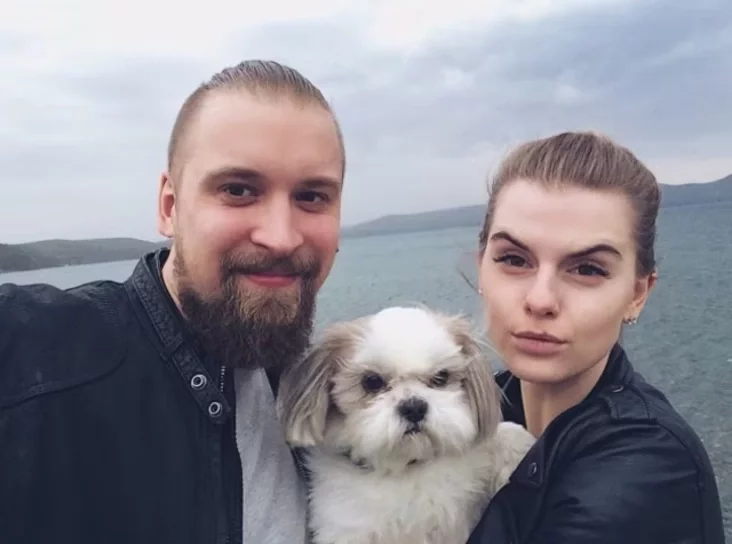
Before entrusting the couple with coordinating such a large-scale operation, the SBU checked both of them on a lie detector in Lviv. Convinced of their loyalty, the special services trained the Timofeevs in assembling drones and the houses in which they planned to transport them. Upon returning to Russia, the Timofeevs were interrogated for three hours at the border by FSB officers because their Russian passports listed Ukraine as their place of birth. However, the couple was eventually allowed through.
Upon returning to Chelyabinsk, Timofeev registered a logistics company and rented a warehouse in the city's industrial zone, very close to the local FSB department. He began selecting drivers for transporting the drones.
As the WSJ writes, he interviewed approximately 20 candidates. Drivers had to be reliable but not curious, and had to pass not only Timofeev's check but also, secretly, an SBU check, which assessed potential candidates' connections with Russian security forces.
Technical preparation
When the equipment arrived in Chelyabinsk (smuggled, disguised as spare parts), the Timofeevs, in the rented warehouse under the guidance of the SBU (via video link), assembled 150 drones and 8 special houses in a week. The vans proved more difficult because the roof of one of them constantly slipped off its delicate hinges. They re-mounted it according to SBU instructions.
The drones themselves were manufactured in Ukraine — they were quadcopters the size of a large plate, capable of carrying about 2 kg of explosives. The mixture was specially designed to burn through aircraft skin and ignite fuel in tanks. Pilots in Kyiv trained to control them for days, building muscle memory, although they did not know their targets until the last moment.
Escape and result of the operation
The Timofeevs left Russia five days before the operation. In the morning, they crossed the border into Kazakhstan in a rented Toyota Hiace minibus, under the guise of a vacation. They took with them their most valuable possessions, including their cat and dog.
On the morning of June 1st, at the headquarters in Kyiv, Vasyl Maliuk finally revealed the targets to the pilots: Russia's fleet of long-range bombers. He showed maps of the airfields and the aircraft's weak points.
Four trucks (besides the one that burned) took up positions near the airfields. The roofs of the houses opened, and 117 drones rose into the sky. For the pilots, hundreds of kilometers away in Kyiv, the defenseless aircraft were easy targets.
According to SBU estimates, 41 Russian aircraft were damaged, at least ten of them irreversibly. Some Western analysts suggest that these figures may be exaggerated, citing satellite images.
However, the SBU insists on its assessment, stating that Russia tried to deceive analysts by promptly replacing damaged aircraft with intact ones at the attacked airfields. The day after the attack, Russian authorities declared Timofeev wanted, but he was already safe.
«Nasha Niva» — the bastion of Belarus
SUPPORT USNow reading


Babaryka and Kalesnikava Spoke with Inga Ruginienė and Called on Lithuania "to Join US Diplomatic Efforts" and "Not to Miss the Window of Opportunity"


Comments