


“This is Slava E., he was very intelligent and decent.” The Sad Story of a Man Whose Body Was Found in a House Surrounded by Dogs in the Maladzyechna District
The case in a village in the Maladzyechna district, where the body of a man with a bitten face was found in a house surrounded by a dozen dogs, took an unexpected turn. Marina contacted the Onliner editorial office and said that she knew the deceased — Slava E. It turned out that behind this case lies a touching and at the same time tragic story of a person with a big heart, writes Onliner.by.
“This summer I helped Vyacheslav Robertovich restore his passport: he lost it 25 years ago, and all this time he was without documents and was considered deceased,” a reader says with great regret in her voice.
According to her, Slava went through a complex bureaucratic procedure to confirm and restore his identity. During the document processing, he met his brother for the first time in a quarter of a century. If not for the tragedy, Slava would have received his long-awaited passport by the New Year holidays. How did he end up in that house and what do the dogs have to do with it?
The Landlady of the House Where Slava Was Found: "He Even Celebrated New Year with Dogs"
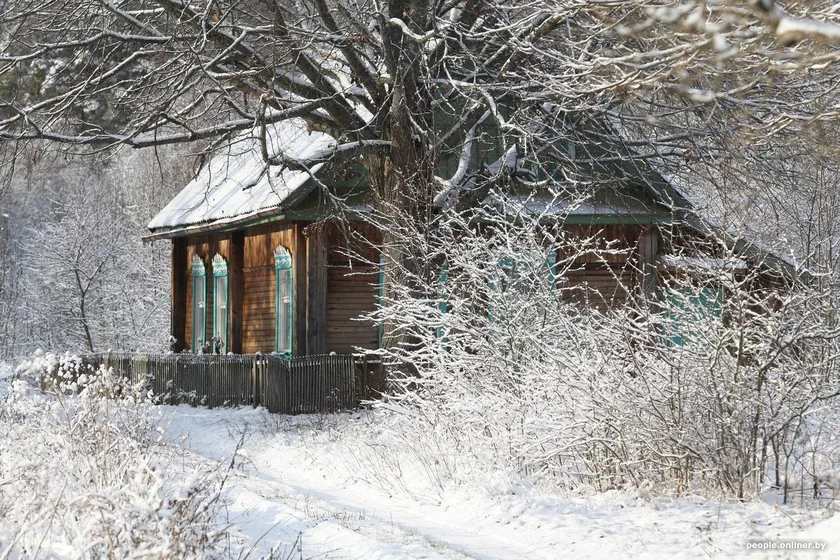
The intelligent man who settled in Anna and Dima’s house (names changed) in the summer of 2024 was known locally only by his first name. Slava arrived with three dogs, and twice a day, no matter what happened or what the weather was like, they could be seen on the road running along the field.
“He would say 'my little dogs' or simply call them 'grey one,' 'skinny one,'” Anna recounts. “These dogs were the meaning of his life. We, in general, connected on this topic — I also love animals very much.”
Anna met Slava in the summer of 2024 — they were traveling on the Minsk-Maladzyechna electric train and struck up a conversation. It turned out the man was looking for a house in the village, “because it was very difficult to rent housing with three dogs.”
“Slava looked like a typical intellectual, he carried himself modestly. From the conversation, it was clear that he was a person with a higher education, very decent,” Anna recalls her first meeting with him. “One day Slava said that he had worked as a photographer, lived in Poland for some time. And when he asked if anyone in our village rented out a house, I offered him to temporarily live in our second house — it was empty and planned for demolition in the future. It was clean there, with iron beds, and a working stove. After some time, Slava came, looked at the house, and soon moved into it with three dogs. It was obvious that he loved them very much: he walked them twice a day and brought whole bags of food from Lyabyadzina market. No one helped him, I know that for sure.”
In communication, Slava was reserved, always addressing me formally with "you," and I him, too. He could joke, discuss some household topic, the garden, dogs, but almost never spoke about himself. It was noticeable that this topic was painful for him for some reason.
Once, the interlocutor recalls, the conversation turned to rare and funny surnames, and Slava revealed his for the first time.
“And I immediately forgot it! And when the tragedy happened, I couldn't remember that surname even for the investigators. Only later did I realize that I had never asked Slava for his passport all that time — that's how deeply I trusted him.”
According to the interlocutor, Slava told her back in the summer that he had finally found a house, was building kennels for dogs there, and planned to move out by autumn. It was from that moment, Anna notes, that his mood changed.
“He became somewhat inspired, started to joke and smile more often. By autumn, though, he became silent again. After some time, he said that he wouldn't be able to move and asked to live in the house for another winter. So, he stayed with us for the winter. I think it was all because of the dogs — they were his family. It's simply impossible to convey in words how warmly he treated them. Even last New Year, Slava refused to celebrate with us, saying: 'I'll celebrate with my little dogs.'”
Tragedy
Anna last saw Slava alive on Thursday, December 18.
“In the morning, I let my dogs out for a walk, and when I opened the door to let them back into the house, I heard Slava's voice. He said he was sick and asked me to draw him a bucket of water from the well and make him some boiling water in a liter jar. I made him a jar of boiling water, and put some lemon in it too. I handed it to him, and he said: 'Be careful, I probably caught coronavirus.'”
I offered to call an ambulance for him, but he refused, saying he was already feeling better, only, he said, weakness remained after the fever. I think he refused then because of the dogs, and I didn't realize it. Now I replay this situation over and over and think: "Why didn't I call that ambulance?!"
Slava also asked me to cut some firewood for him. I remember asking him if it could wait until Sunday, as on Saturday we were going to butcher our old goat and I knew Dima wouldn't have time. Usually, we would cut a week's worth of firewood for him, and he would stack it in his kitchen at home so he wouldn't have to go across the yard in the dark to get it. That's why we only started knocking on his door on Sunday.
— And on Friday?
“On Friday, around 6–7 in the morning, I knocked on his window and asked if he needed anything. The dogs barked, but I'm sure I clearly heard his 'no.' I couldn't have imagined it. Slava usually answered briefly: 'now,' 'wait,' 'coming,' — he might come out afterwards. And that morning, his answer didn't disturb me at all — everything was as usual. The next day, Saturday, we were busy with the goat. On Sunday morning, I knocked on his window, wanting to tell him to prepare a spot for the firewood. A strip of light was visible from the window, showing that the electricity was on in the house, but I knocked and knocked and knocked, and Slava didn't respond. All that could be heard were dogs barking in the hallway right by the door. This alarmed me, as Slava usually kept them in the living room.”

According to Anna, it was impossible to see what was happening inside the house: earlier, with her permission, Slava had covered all the windows from the inside with old doors, explaining it as a safety measure for the dogs.
“He said he was worried that when he wasn't home, the dogs would jump on the windows and could get hurt if they broke the glass. And only after what happened did I realize that he was trying to hide how many animals he actually had…”
Entering the house was not immediately possible due to the dogs: the interlocutor's husband's brother came to help, and only then did the three of them go inside.
What they saw, she says, shocked them: Slava lay on the bed, his entire face covered in blood, surrounded by a dreadful environment and countless dogs.
It should be noted that from the photos and videos circulated on social media after the tragedy, one might conclude that the premises were uninhabitable and a homeless person lived there. But in reality, the story turned out to be far from trivial, and the fate of the found man — incredible and tragic at the same time.
“In spring, I was in the house — and there was perfect order, but what we saw that Sunday… It's even hard to describe in words. We thought Slava only had three dogs — the ones he arrived with and walked daily afterwards. It turned out there were about a dozen of them, or even more.”
And all of them, it turns out, were relieving themselves in the house. How and why it happened, I cannot say. I only know one thing: Slava was a very tidy person. I saw him cleaning the house, going out and pouring out the dirty water after washing the floor. It never even occurred to me to go into his house and check: Slava was an adult, decent, and non-drinking person. Oh… If only he had said how many dogs he had there, I would have helped him sterilize them, feed them. Instead, he hurried back and forth to Lyabyadzina with those huge bags, bringing them food…

Lena, market vendor: "I Noticed How Slava Changed in Summer"
Lena works as a vendor at Lyabyadzina Market and is also involved in animal rescue. When a volunteer friend approached her in the summer and asked for help supporting Slava with food for his dogs, the woman, without hesitation, started helping him.
“At first, I didn't even know his name. He was modestly dressed, looked and acted friendly. It was clear that he loved animals, and for me, that's an indicator. We heard that his first two dogs appeared after a breakup with a woman who left and abandoned her animals with him. I collected all sorts of scraps, skins, chicken spines, pork hocks for his little dogs. Slava said that in winter he cooked food for the dogs in the stove, and in summer he gave them raw food. We usually talked for a short time, just a couple of minutes, while he was packing up.”
According to the interlocutor, in the summer she noticed changes in Slava's behavior: he became more open in communication, joked.
“For me, it was a little unexpected; I was used to him mostly just being silent, and here were such changes. Later I found out that Slava was being helped with restoring his lost passport. And, apparently, this human kindness melted his heart. I felt very sorry for Slava, looking at the thin raincoat and shoes he wore even in winter. I planned to bring him warm clothes, but, to my great regret, I learned that the man who was found was him.”
The Passport Story That Turned His Whole Life Around
The news of the tragedy in the house near Maladzyechna spread instantly. Later, Marina contacted the editorial office and said that she knew who the deceased man was and wanted to tell his very difficult life story, which ended so tragically. She also noted that it was important to her that the person be identified and, since such a tragedy had occurred, be buried under his own name. Thus, in Slava's life, another person emerged who continued the chain of kindness in his fate.
“The man's name is Vyacheslav Robertovich E., he is 72 years old. This summer I traveled with him twice to Barysaw to help him get a passport — 25 years ago he lost his documents and since then he had lived without them: working odd jobs somewhere, renting dilapidated housing with his dogs. A friend told me about him; she met him at Zhdanovichy — they both used to get food for their animals there. And she told me that, apparently, the man had been living without a passport for a long time. So in the summer, I took on his case, as I had once helped another person in a similar situation.”
According to Marina, during the document processing, she learned that Slava had previously lived in Barysaw and had his own apartment there. But, because he had been missing for a long time, he was declared deceased.

“And he had to prove in court that he was alive, and only then restore his documents. He called me three weeks ago and said that the court decision was ready. It turned out that his younger brother, whom he hadn't seen for twenty-five years, lives in Barysaw! They were so overjoyed to meet! And now it's so upsetting that we had just restored his passport when everything happened. Simply a terrible tragedy…”
“Slava recounted that 25 years ago he lost his documents at the Krupki railway station and for all these years he was ashamed to admit it. For some time, he lived with someone in Minsk, then was left alone with these little dogs and ended up in the village.”
In August 2025, Vyacheslav and I went to Barysaw and submitted documents to restore his birth certificate. When the certificate was ready, we came again to go through the identity verification procedure. And that's when he met his brother, who came to confirm his identity. Later, he himself went a couple of times for the identification results. It turned out that Vyacheslav was considered deceased, and it was necessary to appeal to the court for a decision confirming he was alive. And about three weeks ago, he called me and said he was going to pick up the court decision. I then said: "Well, good, just in time for New Year, you'll get a gift: you'll receive your passport." So, that's the story…
— His brother didn't know he was alive?
“He didn't know. Well, such people exist. Vyacheslav was secretive, proud, never asked anyone for anything, working odd jobs somewhere. We planned to deal with pension processing after the passport was issued. In Soviet times, he worked at the Minsk Gear Factory, then at the Barysaw Bread Products Plant. He was such an interesting person; he even boasted that he had been to the Olympics in Moscow in '80, then, during perestroika, he was involved in photography and earned well. But when he lost his documents, he apparently became confused and didn't know how to live. Vyacheslav had an apartment in Barysaw, but he was deregistered from it as deceased.”
— Did the brothers maintain contact after the meeting?
“Their meeting was in my presence. A not-so-young man arrived, limping, unwell, but very kind, sympathetic. He was very happy to see him. It was clear that the brothers came from a very good family. Vyacheslav promised to take care of him . Well, what can I say… It’s a tragic story, and one wants people to know his name and who he was. That he was a very decent person, but not of this world.”
“The Dogs Wanted to Wake Him Up”
Everyone who was interviewed was concerned about the future fate of the dogs, who were suddenly left without an owner. Journalists contacted Denis Burkevich, director of the "Dream" stray animal rescue center. It was he who went to the scene that Sunday morning to help rescuers and ambulance doctors enter the house where Slava E. lived.
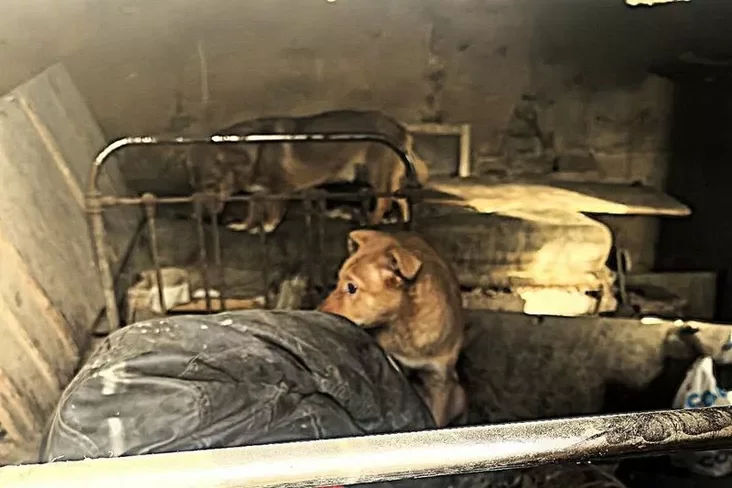
“I put on a special suit and, for the entire time the investigators were working, I acted as a kind of buffer between them and the dogs. The animals were scared, some huddled under the beds and sofa. The man had a bloody face, and it was previously written that rats might have done it, but no.”
This isn't my first encounter with something like this, and I can confidently say that the dogs, trying to "wake up" their owner, simply licked his face until it bled. There were no other injuries.
As for the animals' fate, according to Denis, they remained in the house because they were difficult to access. For the time being, it was decided to leave them there, and Anna was supposed to feed them. But, when journalists contacted the woman, she said that "the dogs were taken away by unknown people."
“All Dogs Were Taken Away in a Minibus”
On Monday evening, December 22, according to Anna, a car pulled up to their house.
“It was around ten, and we were already getting ready for bed. I heard: car doors slammed and my dogs barked. I got dressed and went out to the gate. A minibus was on the road, next to it — a well-dressed man and woman. The latter had a phone glowing in her hand. At first, I thought they were journalists, I wanted to ask them not to film, as my husband and I hadn't recovered from the shock, we hadn't slept for a day. They asked: 'Did a man die here?' Hearing that he did, they said they had come about the dogs and wanted to take them. I warned them that the dogs were not socialized and might bite. But the woman and man assured me that they knew how to handle them.”
“At first, when they entered the house, the dogs indeed barked, but then calmed down. They led them out on leashes, putting them into the bus. I thought these people had come from Denis [director of the "Dream" stray animal rescue center]. And when he called some time later and asked about the dogs, it dawned on me that these people were not from him.”
— How many dogs did they take?
“It was dark, I managed to count 12. Maybe I missed one or counted one twice. And now I'm very worried about who took them, where they are, if they are alive,” Anna cries. “I'm just afraid they might have been taken somewhere to be euthanized. I would really like to appeal to those people who took the animals, to let yourselves be known through your editorial office.”
While the material was being prepared, Vyacheslav's body was taken and buried by his brother on Monday.
“This is a very tragic case, but at least we can be at peace that after 25 years, the man saw his brother and was buried under his own name. His fate, of course, is one you wouldn't read in any novel,” Marina noted.


Comments