


Another work by Yazep Drozdovich was accidentally discovered in Glubok region.
The discovery made in the Church of the Blessed Virgin Mary of Mercy in the village of Zadorozhye adds a new touch to the biography of the legendary Belarusian artist. It turned out that the famous "Uncle Yazep" was engaged not only in creating his own paintings and carpets, but also in the restoration of sacred painting.
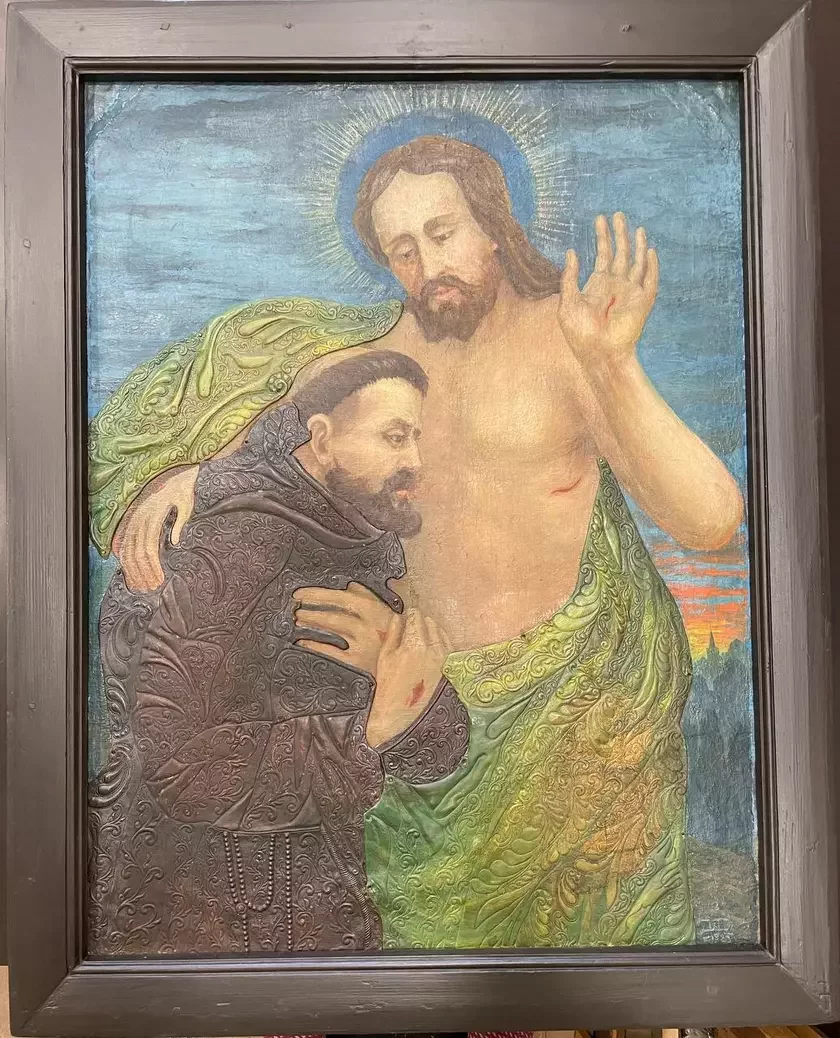
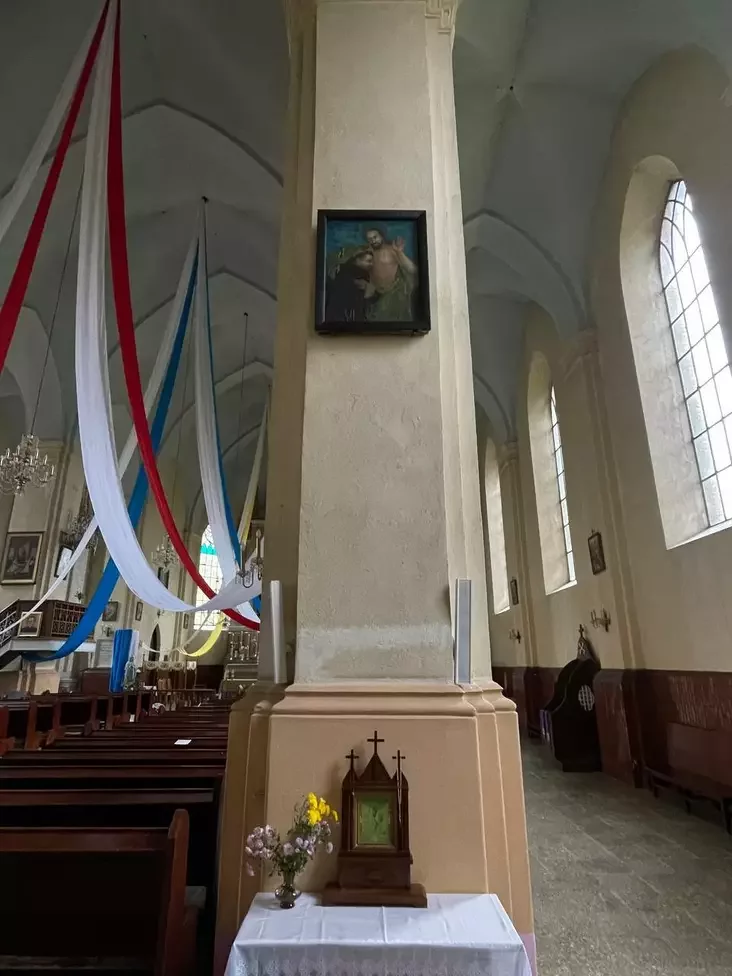
The story of the discovery began last year during the Rosica-Budslau pilgrimage. Researcher Zmicier Mońko, a leading researcher at the Department of Ancient Belarusian Art of the National Art Museum, noticed the icon "Saint Francis and Christ," which hung high on a column of the local church. Despite the distance, the style of execution seemed very familiar to him.
JD and "the image has been repainted"
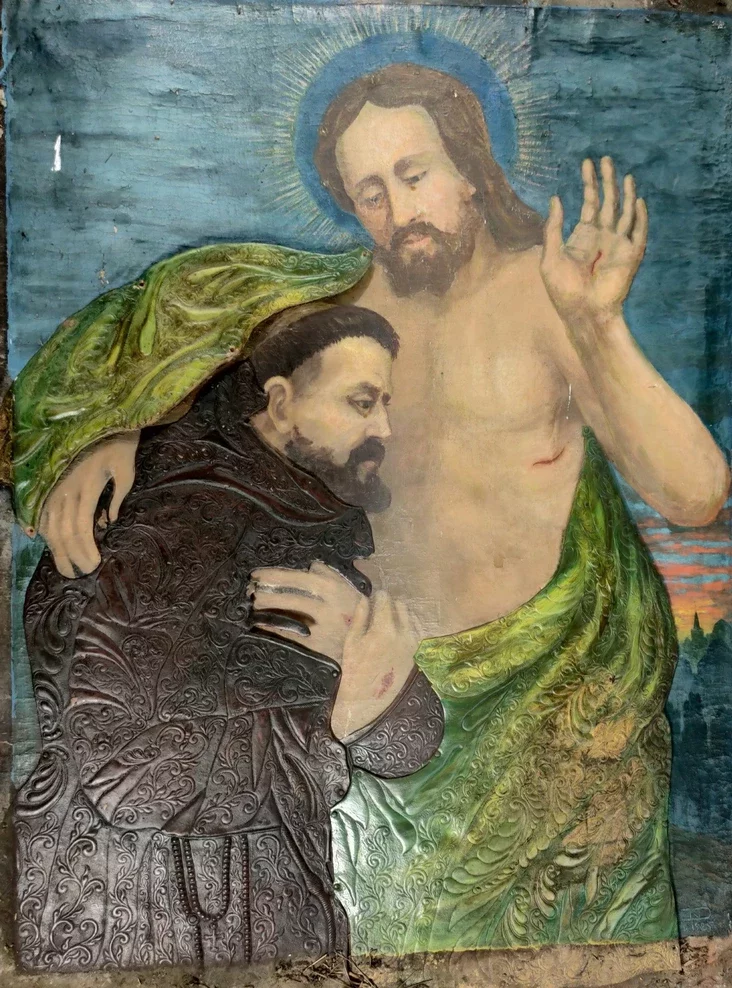
The first thing that caught the researcher's eye was the color scheme and manner of writing. The metal rizas on Christ's cloak were painted in a shade of light green, atypical for canonical iconography, but beloved by Drozdovich. Also, the naive drawing of Jesus' head with a characteristic high forehead indicated the authorship of the "eternal wanderer."
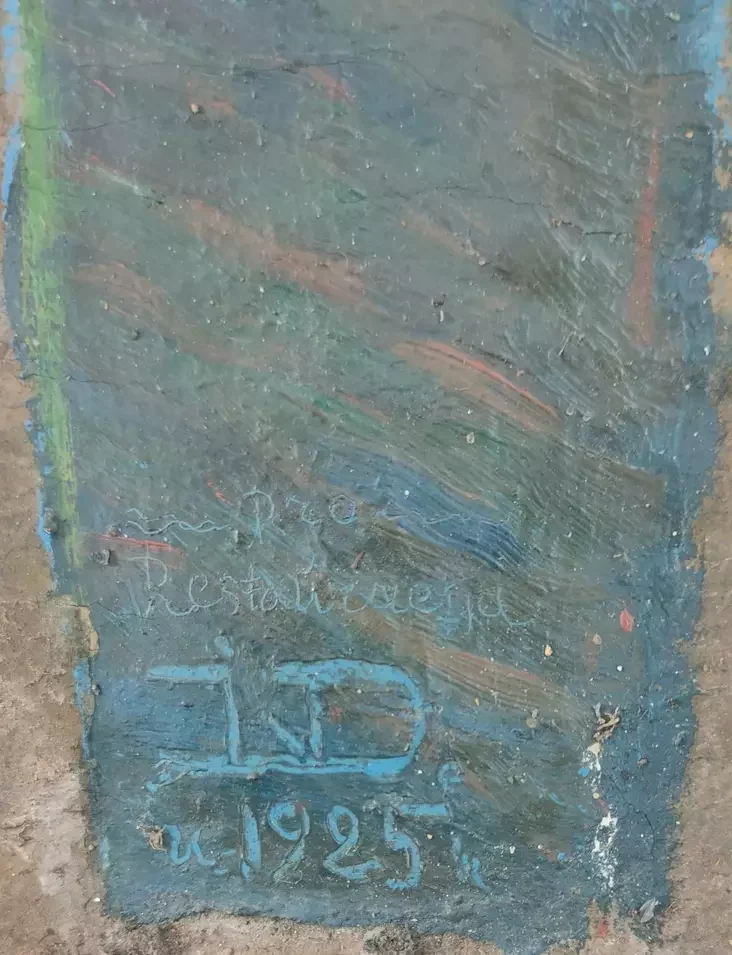
The assumptions were confirmed after the icon was removed for detailed study. In the lower right corner, an inscription was found that dotted all the "i's": "pro Restaŭracija J D. u 1925 h.". The initials "J. D." undoubtedly point to Jazep Drozdovich (in Belarusian Latin: Jazep Drazdovič).
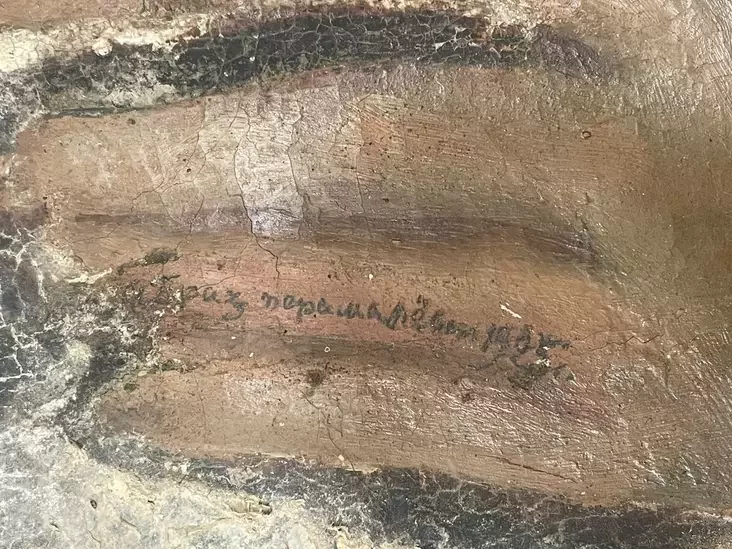
Another confirmation was found under the metal setting. On the image of St. Francis' ring, an inscription in black paint was revealed: "the image has been repainted 1925".
This became a discovery, as there had previously been no information in the scientific literature that Drozdovich was engaged in the conservation and restoration of other people's works.
Jazep Drozdovich worked as a teacher
The restoration date—1925—fits perfectly into the artist's biography. It was at this time that Drozdovich worked as a drawing teacher in Glubokoe, not far from Zadorozhye.
The parish priest of the church in those years was Fr. Franciszek Romeyko (sometimes his last name is written as Romeiko), an active figure in the Belarusian movement who introduced the native language into worship services (and a relative of the outstanding modern Belarusian public figure and author Kastus Shytal). Love for the Belarusian language and folk culture brought the priest and the artist closer together, which led to the order to restore the altar icon.
Jazep Drozdovich significantly changed the icon
The icon was transported to Minsk for restoration and research. An X-ray showed that under the 1925 layer lies an older and more professional painting, probably from the 18th century.
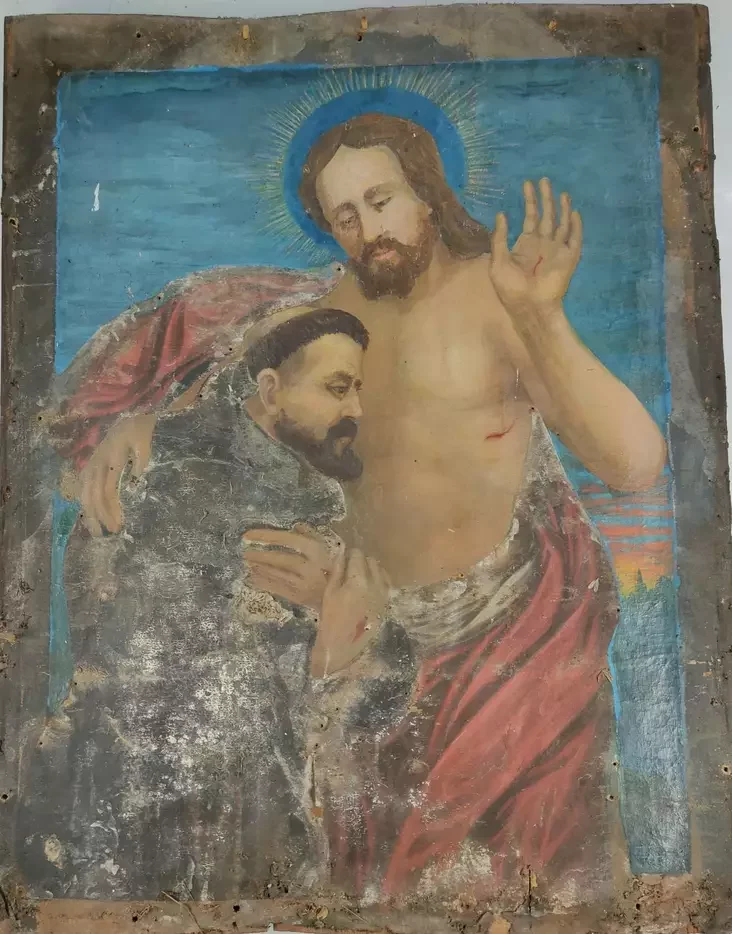
An interesting detail: in Drozdovich's version, the spear wound on Christ's body was on the left side, which contradicts tradition. Technological studies confirmed that on the original lower layer, an unknown artist of the 18th century depicted the wound correctly—on the right.
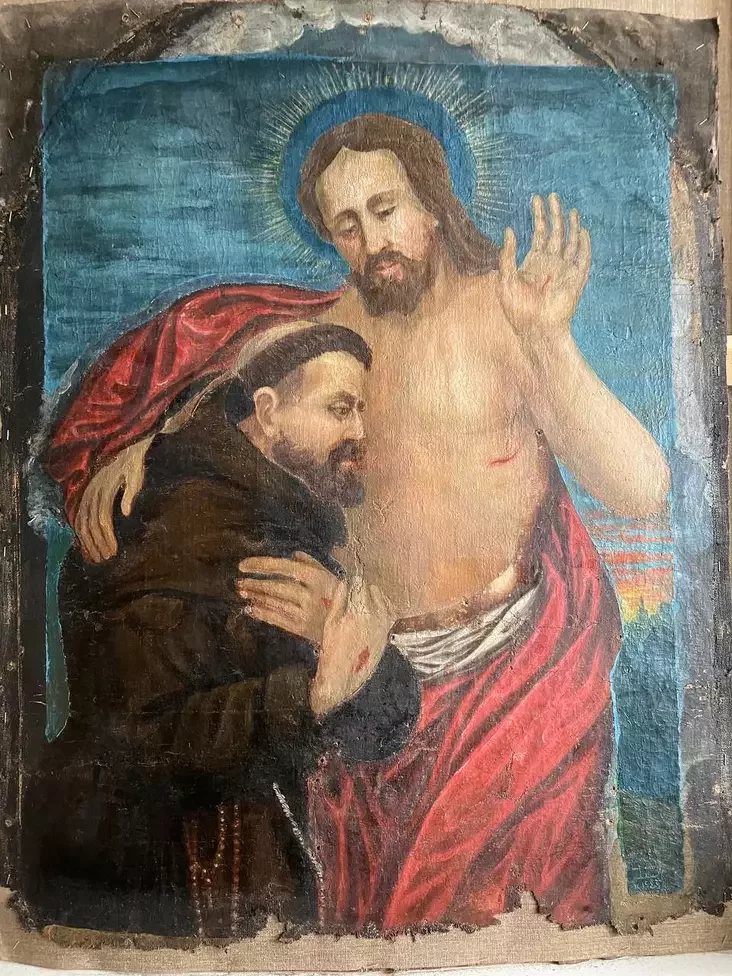
The restorers faced a dilemma: to open up the high-quality painting of the 18th century or to leave Drozdovich's work? It was decided to preserve the 1925 layer.
Firstly, Drozdovich applied paints without an intermediate primer, which made delamination technically risky. Secondly, Drozdovich's work already has great memorial and historical value for Belarusian culture in itself.
A rare subject: "Saint Francis quenches his thirst from Christ's side"
The subject of the icon also turned out to be complex. This is not just an embrace, but a rare iconography: "Saint Francis quenches his thirst from Christ's side." Zmicier Mońko found an analogue of this subject in Italy—an altarpiece from the beginning of the 16th century in the Capuchin monastery of Montecasale. The plot symbolizes a return to the origins of spirituality and the consumption of "living water."


Comments